
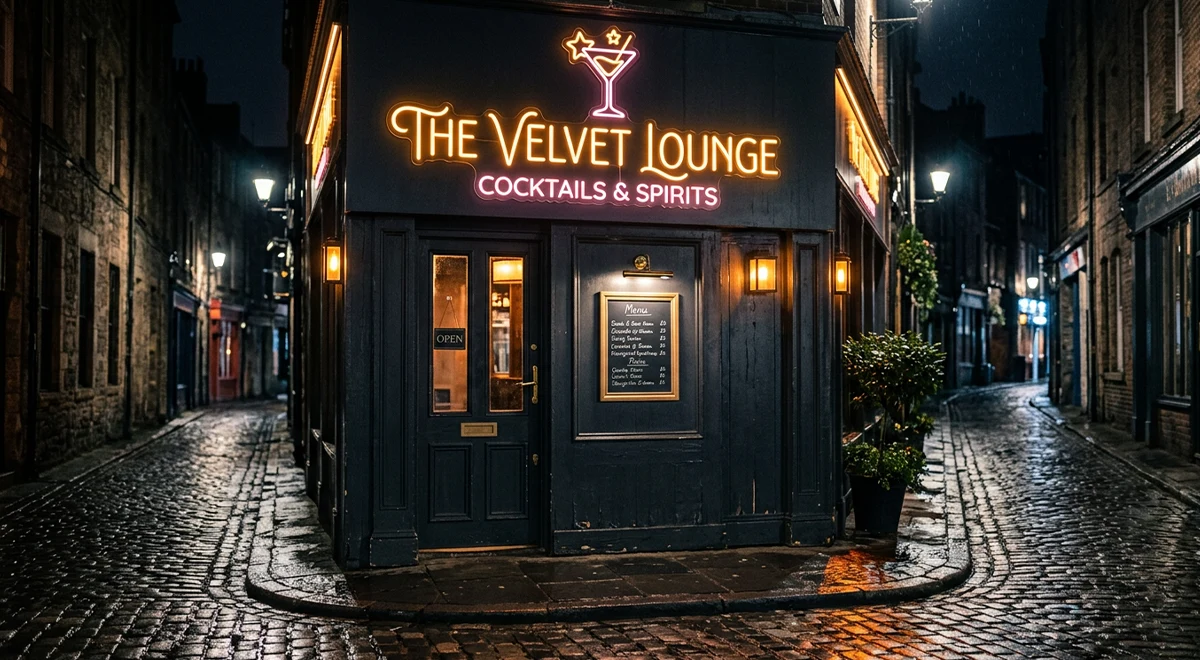
Most businesses that invest in outdoor neon signs do it for the right reason — they want to be noticed. The problem is the execution. They choose the wrong type, the wrong placement, or the wrong technology, and end up with a sign that looks impressive in a product photo but fails completely in real conditions.
Your sign works when you don’t.
It’s on at 11pm when you’re closed, visible on a rainy Tuesday when foot traffic is low. It’s the reason someone crosses the street instead of walking past.
That only happens if you choose the right one.
In this guide, we break down the real differences between outdoor neon sign types, where each performs best, and what to consider before production — so you don’t spend your budget on something that looks good in a showroom and disappears on a busy street.
What „Outdoor Neon Signs” Actually Means in 2026
The term outdoor neon signs is used to describe three technically different products — and confusing them is where most businesses lose money.
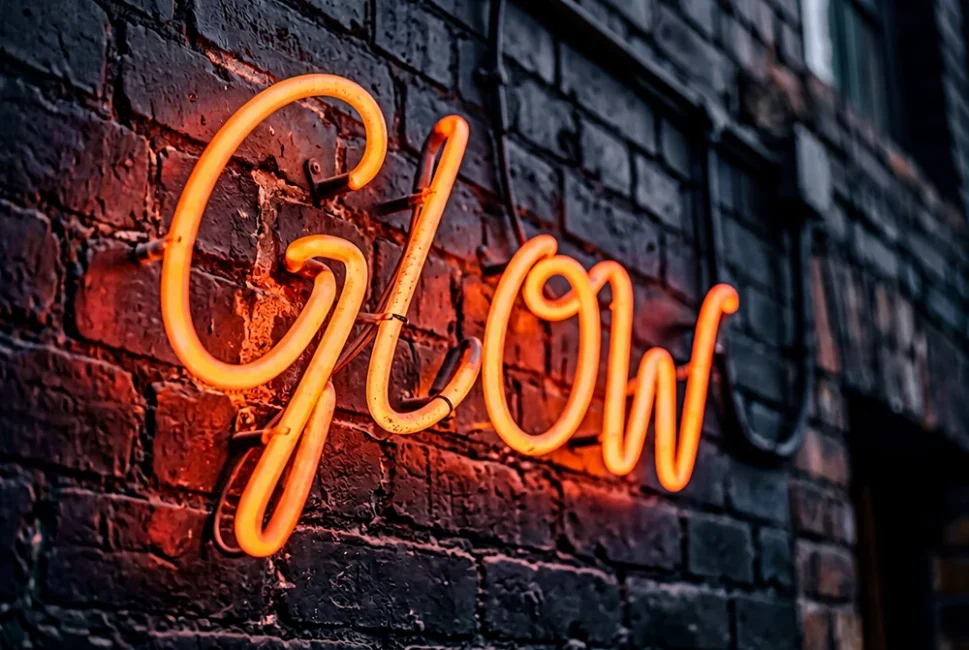
Traditional glass neon is exactly what it sounds like: glass tubes filled with gas, bent into shapes, and electrified. It has a distinct aesthetic — warm, slightly imperfect, with a characteristic buzz and glow. It’s also fragile, expensive to produce, and difficult to maintain outdoors.
LED neon flex is the modern replacement: flexible silicone tubing with LED strips inside, shaped to mimic the look of glass neon. Lighter, safer, more energy-efficient, and far more durable in outdoor conditions. For most commercial applications, this is the right choice.
LED pixel displays are a different category entirely — dynamic, programmable, capable of animation and full-colour content. Higher investment, higher impact, and a completely different strategic function.
The first question to answer before ordering any outdoor neon sign is not „what do I want it to look like?” — it’s „what do I need it to do?” Aesthetics follows function. Always.
Types of Outdoor Neon Signs: A Practical Comparison
Here’s how each type performs across the factors that matter for a commercial outdoor environment. All options below are available through Vizal’s outdoor signs range.
Glass neon (traditional)
Artisan aesthetic, warm imperfect glow. High visual character. Fragile outdoors, high maintenance, difficult to repair. Limited colour range.Best for: Controlled indoor/semi-outdoor use
LED neon flex
Neon look with modern durability. Weather-resistant, energy-efficient, customisable in shape and colour. Lower running costs. Ideal for exterior use.Best for: Most commercial outdoor applications
LED pixel display
Dynamic content, animation, full-colour output. Maximum attention-capture. Higher production investment. Works 24/7 with programmable content.Best for: High-traffic retail, hospitality, events
| Factor | Glass neon | LED neon flex | LED pixel |
|---|---|---|---|
| Outdoor durability | Low | High | Very high |
| Energy efficiency | Low | High | High |
| Maintenance needs | High | Low | Low–medium |
| Visual impact at distance | Medium | Medium–high | Very high |
| Content flexibility | None (static) | None (static) | Full (dynamic) |
| Production cost | High | Medium | High |
Where Outdoor Neon Signs Perform Best
Outdoor neon signs are not a universal solution. They perform exceptionally well in specific contexts — and underperform in others. Understanding this before production saves you from a costly mistake.
Hospitality and food & beverage
Restaurants, bars, and cafés benefit most from neon-style signage. The warm glow communicates atmosphere before the customer is even inside. An LED neon flex sign above an entrance or on a window creates a visual anchor that works especially well in evening conditions — exactly when hospitality venues need it most.
Retail storefronts on commercial streets
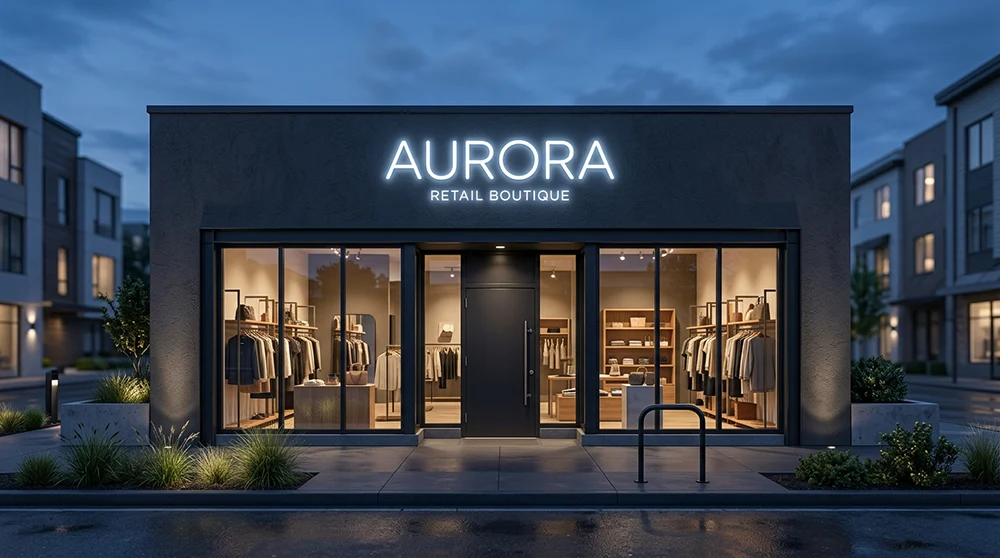
In high-footfall retail environments, outdoor neon signs function as attention triggers. They interrupt the visual noise of a busy street with a focused, glowing presence. The key is placement: at eye level for pedestrians, not high on the facade where they compete with building architecture.
Entertainment and leisure venues
Cinemas, gyms, entertainment centres, and event spaces all benefit from the high-visibility, high-energy quality of neon-style signage. For venues with dynamic content needs — rotating promotions, event schedules, seasonal messaging — LED pixel displays become the stronger choice. See Vizal’s window LED display solutions for this category.
Vizal project — Movieplex Cinema, Bucharest
Vizal installed LED display solutions for Movieplex cinema in Bucharest. In an entertainment environment where content changes weekly, static signage is not enough. The dynamic LED system captures audience attention and promotes content with clarity and impact — the right technology matched to the right business context.
What to Consider Before Ordering an Outdoor Neon Sign
Most businesses order based on what they’ve seen elsewhere. That’s the wrong starting point. Your location has specific conditions that determine what will work — and what will fail.
- ✓Ambient light competition. A sign that looks striking in a dark alley becomes invisible next to a well-lit commercial strip. Your sign needs to be calibrated to its specific light environment — not designed in isolation.
- ✓Viewing distance and angle. Is your sign read from a pavement two metres away, or from a road twenty metres across? Scale, brightness, and letter height must be matched to the actual viewing distance — not estimated.
- ✓Weather and IP rating. Outdoor signs face rain, wind, UV exposure, and temperature variation. Any sign going outside needs a minimum IP65 rating for the electrical components. Ask your supplier for it in writing.
- ✓Mounting surface and structure. LED neon flex on a wooden facade behaves differently from the same sign on a brick or composite panel wall. The mounting method affects both durability and appearance. Resolve this before production, not during installation.
- ✓Local permits and regulations. Many local councils and landlords have specific rules on illuminated signage — size, brightness, operating hours. Verify requirements before production to avoid costly revisions.
Design Principles for Outdoor Neon Signs That Actually Work
A well-executed outdoor neon sign follows different design rules than a print ad or a digital banner. The medium has its own logic — and ignoring that logic produces signs that look good in a mockup and fail in the real world.
Simplicity scales. Complexity doesn’t.
The more complex the design, the more it loses readability at distance and in motion. A name, a symbol, or a short phrase — these work. A full sentence, a detailed illustration, or multiple colours competing for attention — these don’t. Outdoor neon signs reward restraint.
Colour has a function, not just an aesthetic
Warm whites and ambers read as welcoming — ideal for hospitality. Cool whites and blues project precision and professionalism — better for corporate or healthcare contexts. Red attracts immediate attention — highest urgency, often used for promotions. Choose based on what emotion you need to create at first glance, before the customer reads a single word.
Contrast with the background, not just with the dark
Many businesses design their outdoor neon sign for night visibility and forget it needs to work in daylight too. A neon sign mounted on a light-coloured facade can disappear completely in bright daylight. The mounting surface matters as much as the sign itself — darker backgrounds dramatically improve daytime readability.
Vizal project — Coral Travel, Bucharest
Vizal produced an LED display solution for Coral Travel agency in Bucharest. The challenge in travel retail is constant content change — offers, destinations, seasonal campaigns. The solution wasn’t static neon: it was a dynamic LED display that showcases content with the visual impact of illuminated signage and the flexibility of digital. Understanding which technology fits which business model is what separates a good sign from an effective one.
The Mistakes Most Businesses Make with Outdoor Neon Signs
After two decades of producing signage for businesses across Romania and Europe, these are the errors that appear repeatedly — across every industry and budget level.
Choosing traditional glass neon for outdoor use. It looks authentic. It also breaks, fades, and requires specialist repair that most sign companies can’t provide quickly. For commercial exterior applications, LED neon flex delivers the same aesthetic with a fraction of the maintenance burden.
Designing for the product photo, not the environment. A sign photographed against a white studio backdrop and a sign mounted on your actual facade are two completely different experiences. Always evaluate your design in context — ideally with a rendered mockup of the actual installation before production.
Ignoring the daytime appearance. Outdoor neon signs are often evaluated only for their night performance. Your sign is visible — or not — for the full day. A sign that looks dead in daylight is working half the time you’re paying for it.
The most expensive mistake in outdoor signage is not the wrong budget — it’s the wrong technology for the context. A premium glass neon sign in a location that needs weatherproof durability will cost you twice: once to produce, and again when it fails. Match the technology to the environment first.
For a complete overview of outdoor sign options beyond neon, see Vizal’s full outdoor signs range — including 3D letters, light boxes, totems, and LED pixel displays. Or explore completed projects in the Vizal portfolio.
Frequently Asked Questions
Are outdoor neon signs weatherproof?
Traditional glass neon is not suitable for unprotected outdoor use — it is fragile and sensitive to moisture and temperature changes. LED neon flex, when produced with quality silicone casing and rated IP65 or higher, is fully weatherproof and designed for year-round exterior use.
Always confirm the IP rating with your supplier before ordering an outdoor installation. Vizal produces LED neon flex solutions rated for exterior conditions — contact the team for project-specific specifications at vizal.ro/contact.
How long do outdoor neon signs last?
Quality LED neon flex has an operational lifespan of 50,000 hours or more — roughly 5 to 10 years of continuous use depending on daily operating hours. Traditional glass neon typically lasts 8 to 15 years but requires more frequent maintenance and specialist repair. LED pixel displays have comparable lifespans to LED neon flex with the added advantage of modular repair — individual sections can be replaced without replacing the entire unit. In all cases, lifespan is directly tied to material quality and installation conditions.
How much do outdoor neon signs cost?
Pricing depends on type, size, complexity, and installation requirements. LED neon flex signs for a standard commercial storefront typically start in the mid-hundreds of euros for simpler shapes and scale from there. LED pixel displays and custom glass neon involve higher production costs. The more useful calculation is cost per year of expected lifespan — a durable LED neon flex sign at a higher upfront price almost always costs less over time than a cheaper solution that fails in 18 months. Request a quote based on your specific location and requirements at vizal.ro/contact.
Can outdoor neon signs be customised in shape and colour?
Yes — LED neon flex is fully customisable in both shape and colour. It can be bent and formed to reproduce logos, letterforms, icons, and freeform shapes with high accuracy. Colour options range from single-colour static to RGB (colour-changing) variants. Traditional glass neon also offers shape flexibility but with a more limited colour palette and significantly higher production complexity. For brand-specific customisation, Vizal’s team works from your existing brand guidelines to ensure colour and shape accuracy. See examples in the LED neon flex section.
Conclusion: The Right Outdoor Neon Sign Is a Business Decision, Not an Aesthetic One
The businesses that get the most from their outdoor neon signs are not the ones that chose the most impressive option — they’re the ones that chose the right option for their specific location, industry, and operating conditions.
Visibility is not a design goal. It’s a business outcome. And your sign is either delivering it or it isn’t.
If your current signage isn’t stopping people — or if you’re starting from scratch — the decision starts with the right conversation, not a product catalogue. Vizal has been producing custom signage solutions for over 20 years, at factory prices, with a 2-year guarantee. The work speaks for itself.