
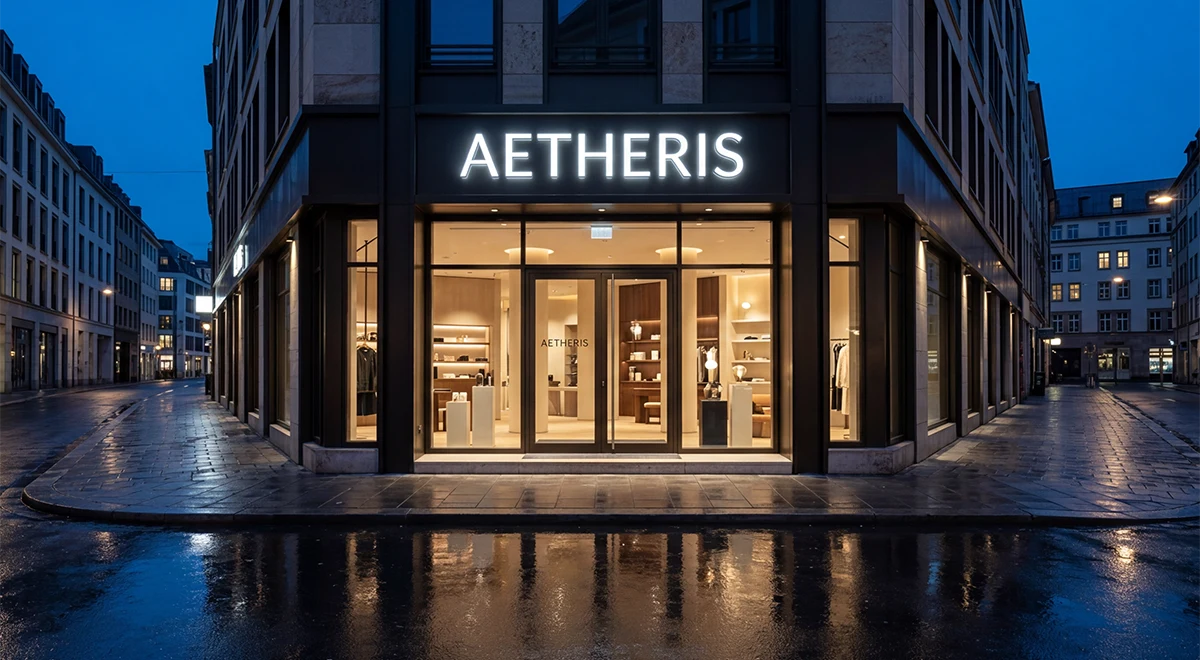
You invested in your interior. Maybe in your product, your staff, your social media presence. And yet customers walk right past your storefront signs without stopping — because your sign isn’t doing its job.
The problem is not your offer. It’s your visibility. If people don’t see you, they don’t remember you. And if they don’t remember you, they don’t buy.
Storefront signs are the first — and often only — moment you have to stop someone in their tracks. In this guide, we break down what actually works, what most businesses get wrong, and how to choose the right sign for your location, industry, and budget.
What Storefront Signs Actually Do (Not What You Think)
Most business owners think a storefront sign is a name tag. Something that says „we’re here.” That’s the minimum — and the minimum is not enough in a competitive commercial environment.
A well-executed storefront sign does three things at once: it identifies your business, communicates your brand positioning, and creates a reason to enter. That third function — creating desire — is where most signs fail completely.
Think about the last time a sign made you stop. It wasn’t because it had a lot of text. Wasn’t because it used three fonts. It was because it was visible, clear, and looked like it belonged to a business worth entering.
A weak storefront sign doesn’t just fail to attract customers — it actively signals that your business isn’t serious. People make judgments about quality before they ever walk through your door. Your sign is the first data point.
Types of Storefront Signs That Actually Work
Not every sign type fits every business. Here’s what’s available, what each delivers, and where each works best. All of these are produced and installed by Vizal — see the full range on the outdoor signs page.
Illuminated 3D letters
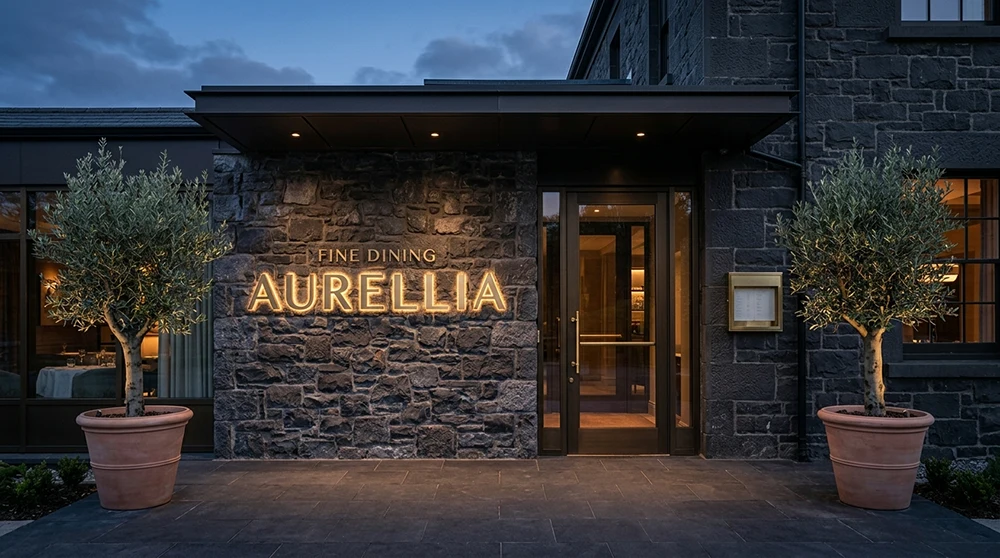
Maximum visibility day and night. Projects brand confidence from a distance. Works for retail, hospitality, and corporate facades. → See 3D letter options
Light boxes
Even, premium illumination across the full sign face. Ideal for storefronts where brand clarity and consistency matter most. → See light box options
Steel totems
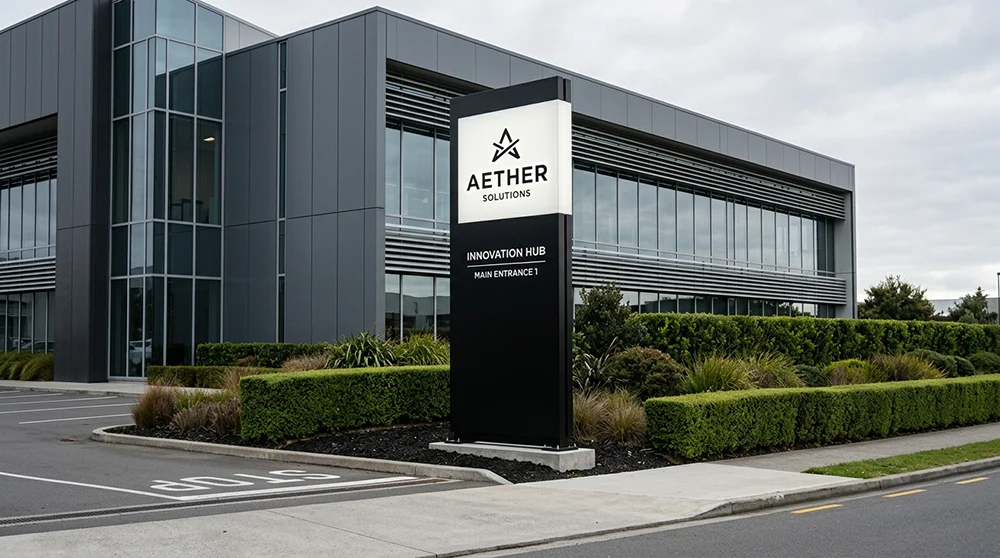
Freestanding authority. Used when you need visibility from the road — parking lots, building entrances, multi-tenant locations. → See steel totems
Window LED displays
Dynamic content visible from the street. Captures attention in high-footfall environments — retail, banking, hospitality. → See window LED
Outdoor prints & vinyl
Fast, cost-effective, and versatile. Best for promotions, seasonal campaigns, or locations with short lease terms. → See outdoor prints
LED pixel displays
Motion and dynamic content in outdoor environments. Highest attention-capture rate, especially in low-light conditions. → See LED pixel
How to Choose the Right Storefront Sign
There is no universal answer. The right storefront sign depends on four variables: your visibility conditions, your brand positioning, your industry, and your budget-to-longevity ratio.
Start with visibility, not aesthetics
Before you think about colors or materials, answer this: from what distance do your customers first see your location? A sign visible from 5 meters requires a completely different approach than one that needs to work from 50 meters across a road. Scale, contrast, and illumination are determined by this single factor — and most businesses skip it entirely.
Match the sign to the brand, not the other way around
A luxury jeweler and a fast-food chain can both have excellent storefront signs. But the materials, illumination style, and proportions will be completely different. Your sign is not a separate design project — it is an extension of your visual identity. When they’re misaligned, both suffer.
Vizal project — Annabella Retail, Râmnicu Vâlcea
Vizal produced custom illuminated signs and a steel totem for Annabella retail stores in Râmnicu Vâlcea. The solution was designed for maximum street visibility while maintaining brand consistency across multiple locations. The result: a sign system that works as hard as the business behind it.
Think in years, not upfront cost
A cheaper sign that lasts two years and fades after six months costs more over time than a quality solution built for a decade. Calculate cost per year of lifespan — not the invoice amount. Quality outdoor storefront signage produced with the right materials pays for itself in additional foot traffic within the first year in most cases.
Design Principles That Drive Visibility – Storefront Signs
Good storefront sign design is not about looking beautiful. It’s about being seen, understood, and remembered in under three seconds. These are the principles that separate effective signs from forgettable ones.
- ✓Contrast first. The single most important design factor for outdoor readability. High contrast between text and background is non-negotiable. Similar tones — regardless of how refined they look on screen — disappear in real conditions.
- ✓One message, one glance. If someone needs five seconds to understand what your sign says, they won’t bother. One name, one clear function. No taglines squeezed into the same visual field.
- ✓Design for the furthest point first. Build your layout at the distance your sign needs to work from. What looks good on a 27-inch monitor will not automatically translate to a 3-meter facade sign viewed from a moving car.
- ✓Illumination is not optional after dark. If your business operates past sunset — even occasionally — an unlit sign is an invisible sign. Illuminated options are not a luxury upgrade. They are a basic visibility requirement.
- ✓Whitespace is earned visibility. Overcrowded signs cancel themselves out. Give your message room. A sign with generous spacing reads faster and projects more authority.
Vizal project — Medikali Clinic, Bucharest
Vizal produced outdoor signage and a steel totem for Medikali clinic in Bucharest. Healthcare environments require a specific balance: professional, clean, and immediately legible. The signage system Vizal delivered communicates trust before the patient enters the building — which is exactly what that industry demands.
What Most Businesses Get Wrong – Storefront Signs
After 20 years of producing storefront signs across retail, hospitality, healthcare, and corporate sectors, the same mistakes appear across every industry.
Too much text. A sign is not a brochure. A sign is not a website. It is a three-second decision trigger. The moment you add a second line of explanatory copy, you’ve already lost the person walking past.
Wrong scale for the location. A sign that works perfectly in a design brief can look undersized on a building facade, or aggressive against a heritage-area shopfront. Scale must be resolved on-site, not on screen.
No illumination budget. Natural light flatters your sign from 8am to 4pm on clear days. After that, your business becomes visually absent. Illumination is not an aesthetic choice — it is a business hours decision.
Ignoring maintenance. A faded, damaged, or partially unlit sign communicates neglect. It does not communicate „we’re established.” It communicates „we stopped caring.” Schedule inspections and treat sign maintenance as part of your brand standards.
The clients who get the best results from their storefront signs are the ones who treat them as brand assets, not one-time expenses. The sign is working when you’re not there. That has a value — and it should be protected accordingly.
Real Results: What Clients Say About Their Signs
Vizal has produced storefront signage for businesses across retail, hospitality, healthcare, automotive, and corporate sectors. Here’s what some of them report. You can explore completed projects in the Vizal portfolio.
„Working with Vizal for many years — from prints to wraps and illuminated signs — they remain a trusted partner we confidently recommend.” — Tiberiu Soare, Kilowat
„From signage to marketing and web support, they deliver quality and speed. Vizal has become a trusted, valued partner over the years.” — Vlad Nițu, Emerson
„Professional, efficient, and high-quality work delivered on schedule.” — Adelina, DCZ Shop
Frequently Asked Questions
How much do storefront signs cost?
The price range for custom storefront signs varies significantly based on type, size, material, and illumination. A flat panel or window vinyl starts at a few hundred euros. Illuminated 3D letters or a full totem solution for a commercial facade will sit in a different range entirely. The more useful question is: what is the cost per year over the lifespan of the sign? A quality solution that lasts 10+ years is almost always less expensive long-term than a cheap sign replaced every 2–3 years. Contact Vizal for a project-specific quote: vizal.ro/contact.
How long does production and installation take?
Production timelines for custom storefront signs typically range from 2 to 6 weeks depending on complexity, materials, and permit requirements. Simpler solutions — prints, vinyl, flat panels — can be turned around faster. Illuminated 3D letters, light boxes, and steel totems require more production time. Always plan your sign production in advance of your opening date or campaign launch — rushing signage production is where quality gets compromised.
Do I need both indoor and outdoor signs?
Outdoor storefront signs handle the first impression and foot traffic capture. Indoor signage handles the experience once customers are inside — brand reinforcement, navigation, point-of-sale communication. In high-footfall retail and hospitality environments, both matter. If budget requires prioritization, start with your outdoor sign: it generates the customers your interior can then convert. See Vizal’s full range of indoor signage solutions for the next step.
What materials are used for outdoor storefront signs?
Quality outdoor signs use weather-resistant materials rated for multi-year exterior exposure: aluminum composite panels, galvanized steel frames, UV-stable acrylics, and sealed LED systems. The material choice affects both longevity and appearance. Vizal uses factory-grade materials across all outdoor production — same materials, no markup — because sign durability is a direct function of material quality, not brand promise.
Conclusion: Your Storefront Sign Is Your Visibility Strategy
Online advertising reaches people who are already looking. A well-executed storefront sign reaches people who weren’t — and converts them into customers before they even realize it happened.
You’re responsible for your visibility. Location is not an excuse. Competition is not a reason to stay invisible. The businesses that understand this invest in their signs the way they invest in their best staff: as long-term assets that deliver results every day.
If your current sign is not driving foot traffic, it’s not doing its job. That’s a solvable problem.