
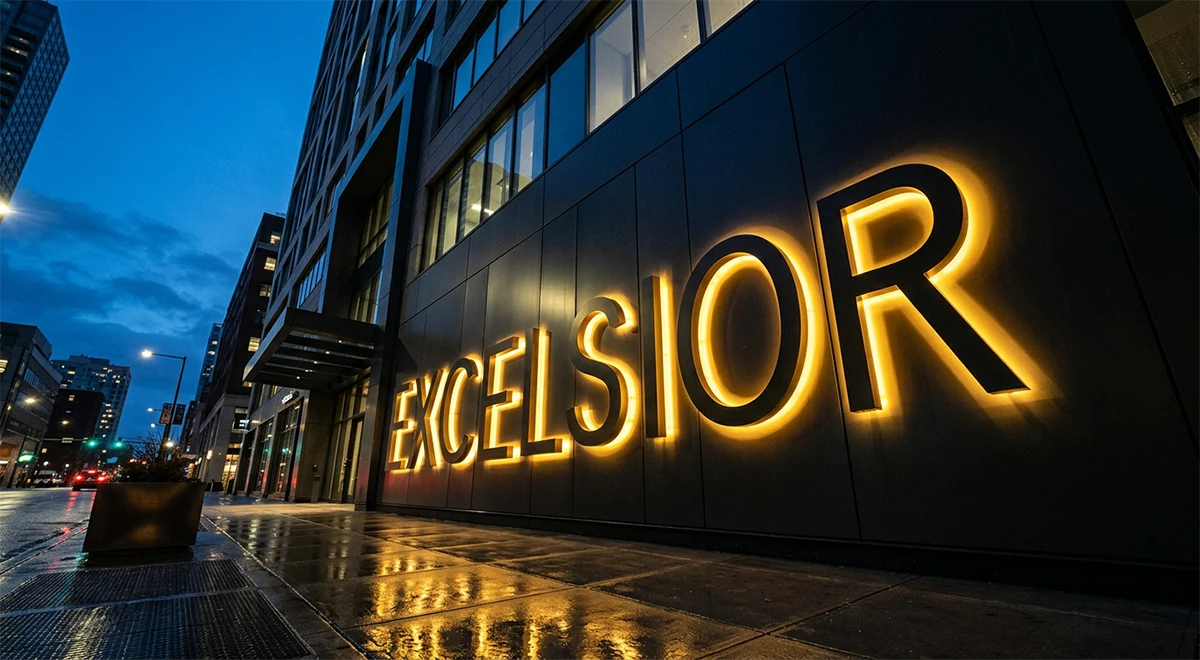
Outdoor 3D Letters – Your facade is working every hour of the day. When you’re open, it pulls people in, When you’re closed, it builds familiarity. When a competitor opens nearby, it holds your ground. Most business owners don’t think about it this way. They treat the facade as a formality — something to tick off the build-out checklist before the real work begins.
That’s a mistake. And it’s a costly one.
Outdoor 3D letters are the most direct, most durable, and most commercially effective way to claim your space on a street, a building, or a commercial development. This article explains what they are, how they work, and how to choose the right solution for your business.
What Are Outdoor 3D Letters and How Are They Built
Outdoor 3D letters are individually fabricated letterforms — each letter produced as a separate three-dimensional object — mounted directly onto a building facade, a wall panel, or a structural frame. Unlike printed banners or flat signage, they project outward from the surface. They create depth, cast shadows and they communicate presence in a way that two-dimensional signs simply cannot.
The anatomy of a 3D letter — materials and construction
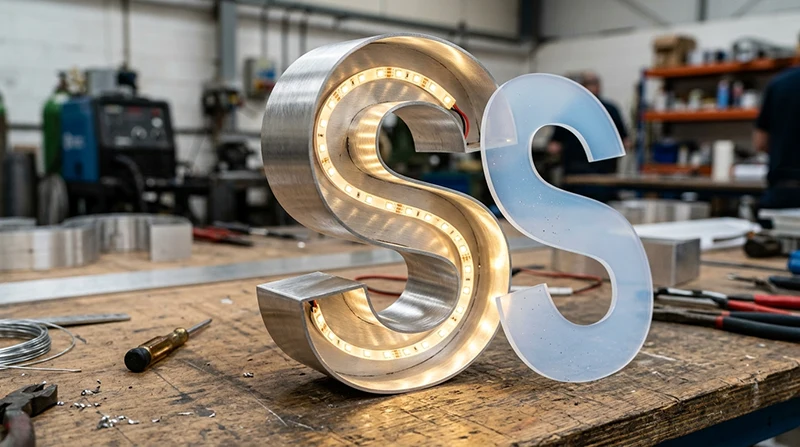
Each letter consists of three main components: the face (the front visible surface), the return (the side walls that give the letter its depth), and the backing system (the mounting structure fixed to the building).
Manufacturers typically craft the face from acrylic, aluminium composite, or brushed stainless steel — selecting the material based on the desired finish and whether the letter requires illumination. Fabricators build the return from aluminium or galvanised steel, which gives the letter its structural rigidity and weather resistance. Installers fit LED modules inside illuminated letters and wire them to a transformer mounted discreetly behind the facade.
The result is a sign that is structurally sound, weatherproof, and built to last — not a graphic applied to a surface, but a physical object that belongs to the building.
Illuminated vs. non-illuminated — when each makes sense
Not every outdoor 3D letter needs to be illuminated. Cut-out metal letters on a premium office facade, for example, can communicate authority and precision without any light source. The depth and material quality do the work.
But for most businesses operating in competitive street environments — retail, hospitality, services — illuminated outdoor 3D letters are the correct choice. They extend your visibility into the evening and early morning hours. They maintain brand presence in low light, overcast weather, and high visual noise environments. If your business is open after dark, or if the surrounding area is busy and competitive, illumination is not optional. It’s the baseline.
You can explore the full range of outdoor signs that VIZAL produces to understand where 3D letters fit within a broader signage system.
Types of Outdoor 3D Letters
The category of outdoor 3D letters covers several distinct construction methods. Each produces a different visual effect and suits different environments.
Front-lit channel letters
The most common type. LED modules are mounted inside the letter and shine forward through a translucent acrylic face. The result is a clean, evenly lit surface that is visible at distance and in all lighting conditions. Front-lit channel letters work in nearly every commercial context — from high street retail to petrol stations to healthcare facilities.
They are practical, cost-effective, and highly legible. When in doubt, this is the starting point.
Backlit (halo) letters
In halo letters, the LED source is directed backward — toward the wall — rather than forward. The letter itself remains unlit, but a glow appears around and behind it, creating a halo effect on the facade surface. This technique reads as premium and refined. It suits luxury retail, high-end hospitality, and corporate environments where subtlety is part of the brand language.
Halo letters require a specific standoff distance from the wall and a wall surface that reflects the light effectively. They reward careful specification.
Cut-out metal letters
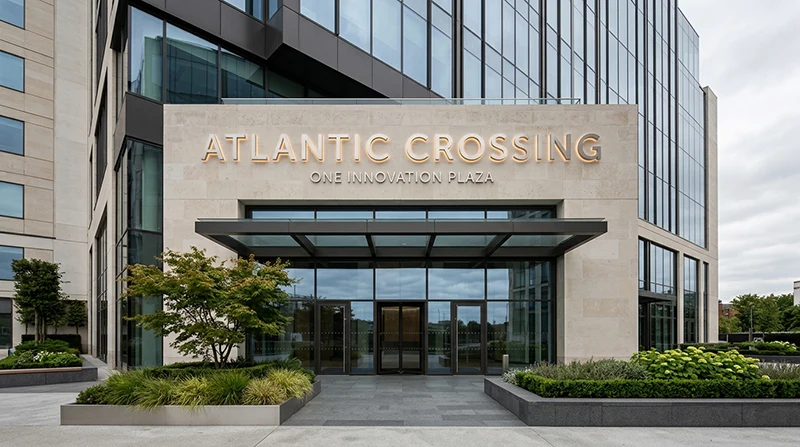
Non-illuminated letters precision-cut from aluminium, steel, or stainless steel. Available in brushed, polished, powder-coated, or raw finishes. They work best in environments where the architecture itself provides sufficient visual distinction — premium office buildings, luxury hotels, design studios, flagship stores.
Without illumination, they rely entirely on material quality and dimensional presence. When specified correctly, they are among the most visually sophisticated options available.
Mixed finish letters — combining materials
Advanced projects often combine construction methods within a single sign. A letter might have a brushed aluminium return, a translucent acrylic face, and halo illumination simultaneously — producing both a lit front face and a rear glow. Mixed finish letters are more complex to produce and install, but they allow for a level of visual precision that single-method signs cannot achieve.
For brands where the facade sign is a design statement as much as a functional marker, this is the direction worth exploring.
Why Outdoor 3D Letters Outperform Flat Signage
Flat signs — printed panels, vinyl lettering, flat-cut acrylic — have their place. But in a direct comparison with outdoor 3D letters, they consistently underperform on the metrics that matter commercially.
Depth, shadow, and visual hierarchy
The human eye is drawn to three-dimensional objects before flat surfaces. This is not a design preference — it’s how visual perception works. Outdoor 3D letters create depth and shadow that shift as the light changes throughout the day. They have physical presence on the facade that printed signs do not. In a street environment with multiple competing businesses, that dimensional difference translates directly into attention captured.
Visibility at distance — how letter height affects reach
There is a direct relationship between letter height and the distance at which a sign becomes legible. As a general reference, a 100mm letter is comfortably readable at approximately 10 metres. A 300mm letter extends that to roughly 30 metres. For businesses on fast-moving roads or large commercial developments, letter sizing is a technical decision with real commercial implications.
Most businesses underestimate the required letter height. They choose dimensions that look proportionate from close proximity, without accounting for how the sign reads from a vehicle or from across a wide pedestrian space. The result is a sign that exists, but isn’t truly seen.
Durability in outdoor conditions
Outdoor 3D letters produced with correct materials — aluminium structure, UV-stable acrylic face, marine-grade finishes — are built for long-term outdoor exposure. They resist UV fading, moisture ingress, temperature cycling, and wind load. A properly specified and installed set of outdoor 3D letters should require no significant maintenance for a minimum of eight to ten years.
Flat printed signs degrade visibly within two to three years in most outdoor environments. The long-term cost comparison is not as close as the upfront pricing suggests.
Where Outdoor 3D Letters Work Best
Retail storefronts and shopping centres
Retail is the most competitive signage environment. A storefront on a busy street is competing with every other business in the immediate vicinity for the same pedestrian and vehicle attention. Outdoor 3D letters give retail businesses a fixed point of visual authority — a physical marker that communicates permanence, investment, and confidence.
For Annabella retail stores in Râmnicu Vâlcea, VIZAL delivered custom illuminated outdoor signs positioned for maximum visibility on the main commercial street. The signage was designed to work both for foot traffic at close range and for vehicles approaching from distance.
For a broader view of completed retail and commercial projects, the VIZAL portfolio covers a range of applications across sectors.
Corporate headquarters and office buildings
In corporate environments, the facade sign communicates something different from retail. It is less about attracting passing trade and more about communicating stability, scale, and identity. Visitors, partners, and potential employees form an impression of the organisation from the building before they enter it.
For Greenfield in Bucharest, VIZAL produced outdoor channel letter signage for a real estate and wellness development — facade lettering that needed to work across a large architectural surface while maintaining legibility and brand consistency at scale.
Hospitality — hotels, restaurants, clubs
Hospitality venues have a specific signage challenge: they need to communicate quality to people who are often making a decision on the move, with limited time and information. The facade sign is frequently the only brand touchpoint that happens before the decision to enter.
For The Marmorosch hotel in Bucharest, VIZAL combined outdoor facade signage with a premium wayfinding system that extended the brand across the entire property. The outdoor lettering was matched in material and finish to the building’s historic architecture — present without being intrusive, premium without overstatement.
How to Specify Outdoor 3D Letters Correctly
The difference between outdoor 3D letters that perform and those that disappoint is almost always in the specification stage — not the production stage. Getting the brief right before fabrication begins is everything.
Letter height and viewing distance
Start by identifying the primary viewing scenario. Where will most people be when they first see the sign — on the pavement directly in front, from across a road, from a moving vehicle? That distance determines the minimum letter height required for legibility. Work backwards from the viewing scenario, not forwards from what looks proportionate on a design mockup.
Material and finish selection
Material choice should follow brand positioning, not personal preference. A brushed stainless finish communicates something different from a gloss white acrylic face. A halo-lit letter reads differently from a front-lit one. The question to answer is: what does this sign need to communicate about this business to someone seeing it for the first time?
If the answer involves words like premium, refined, or understated — look at metal finishes, halo illumination, and restrained color palettes. If the answer involves visible, immediate, or high-impact — front-lit channel letters in brand colors are the correct direction.
Mounting method and structural requirements
Outdoor 3D letters are fixed structures. They require a structural assessment of the mounting surface — particularly for larger letters on older buildings or cladded facades. The mounting system must account for wind load, thermal expansion, and the weight of the letters over time. This is not optional engineering. A sign that fails structurally is a liability, not just an inconvenience.
VIZAL handles full installation, including structural assessment and fixings, as part of every project. Factory production at VIZAL is paired with on-site installation by experienced teams — the sign is not handed over as a flat-pack problem for someone else to solve.
Frequently Asked Questions
How long do outdoor 3D letters last?
With correct material specification and professional installation, outdoor 3D letters should last a minimum of 10 years without significant maintenance. The LED modules inside illuminated letters have a rated lifespan of 50,000 hours or more. The aluminium structure, if correctly fabricated and finished, will outlast the LED system. At VIZAL, all signage carries a 2-year production guarantee — but the practical lifespan is considerably longer under normal conditions.
Are outdoor 3D letters weatherproof?
Yes — when produced with outdoor-rated materials. Aluminium returns, UV-stable acrylic faces, marine-grade powder coatings, and sealed LED systems are all standard in correctly specified outdoor 3D letters. The letters withstand rain, temperature variation, UV exposure, and wind load. Getting the specification right from the outset is non-negotiable — weatherproofing happens in production, not as an afterthought.
Can outdoor 3D letters match my exact brand colors?
Yes. Acrylic faces are available in a wide range of standard colors, and custom RAL or Pantone matching is available for powder-coated finishes on metal elements. For illuminated letters, the acrylic face color interacts with the LED light source — your team must account for this during specification to ensure the final illuminated color matches your brand standard accurately. VIZAL handles color matching as a standard part of the production brief.
What is the installation process?
Installation begins with a site survey — assessing the mounting surface, access requirements, and electrical connection points for illuminated signs. The letters move from fabrication to site delivery and installation by a specialist team — all against final approved drawings. Most standard retail or office facades wrap up in a single working day. Larger or more complex projects — multi-storey facades, structural mounting challenges — follow a scheduled timeline agreed in advance. VIZAL manages the full process from survey to handover.
The Bottom Line
Outdoor 3D letters are not a cosmetic decision. They are a commercial one.
The facade of your building is producing an impression every hour of every day — for customers, for competitors, for everyone who passes. The question is whether that impression is working for you or against you.
A flat printed sign on a busy street says: we are here. Outdoor 3D letters say: we are established, we are serious, and we are not going anywhere. That difference registers in seconds. It shapes decisions that happen before a single conversation takes place.
If your current facade signage isn’t doing that job, it’s worth fixing. The investment is lower than most business owners expect. The return, in visibility and customer confidence, is higher.
Ready to take your facade seriously?
Tell us your location, your business type, and what you’re trying to achieve. We’ll recommend the right outdoor 3D letter solution — custom-built, factory priced, with a 2-year guarantee.