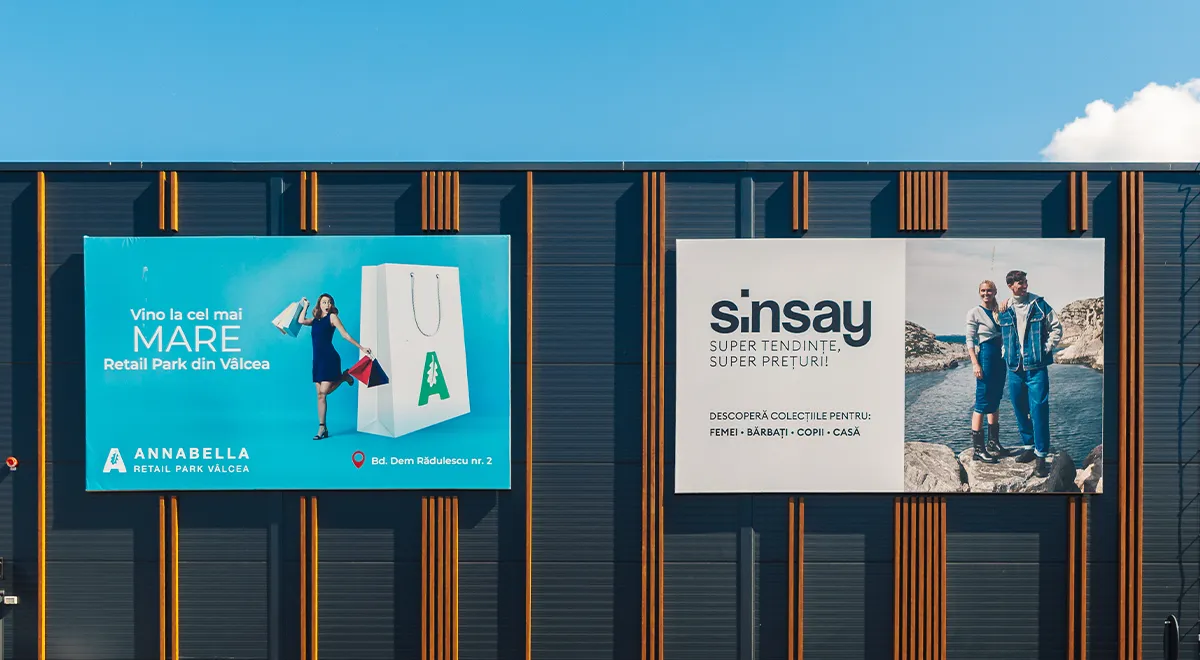
Most retailers think of signage as one thing: the sign above the door. In reality, a store is talking to the customer at every step — from the pavement, through the window, down the aisle, to the till. Retail signage is the whole conversation, not a single line of it.
For a brand rolling out across locations, or a reseller equipping retail clients, the difference matters. Get the system right and every touchpoint pulls in the same direction. Get it piecemeal and the store feels incoherent, even when each individual sign looks fine.
This guide maps the full system: what retail signage includes, what each part does, and — the part most guides skip — how to keep it consistent across every store you open.
Retail signage is a system, not a sign
Retail signage breaks into five layers, each with a different job.
Exterior signage gets people to notice and enter. Window signage converts the passer-by into a visitor. In-store and POS signage guides and sells once they are inside. Wayfinding moves them through larger spaces. And digital signage makes any of these dynamic.
A sign that wins on the facade but is contradicted by a chaotic interior wastes the footfall it earned. The layers work together or they undermine each other. Thinking in systems, not signs, is what separates a store that feels considered from one that feels thrown together.
Exterior signage: the facade that stops the street
This is the layer with the most direct impact on footfall, because it decides whether anyone comes in at all. Research compiled by the International Sign Association (ISA) links improvements in storefront signage to measurable gains in customer counts — which is why the exterior is where a signage budget usually works hardest.
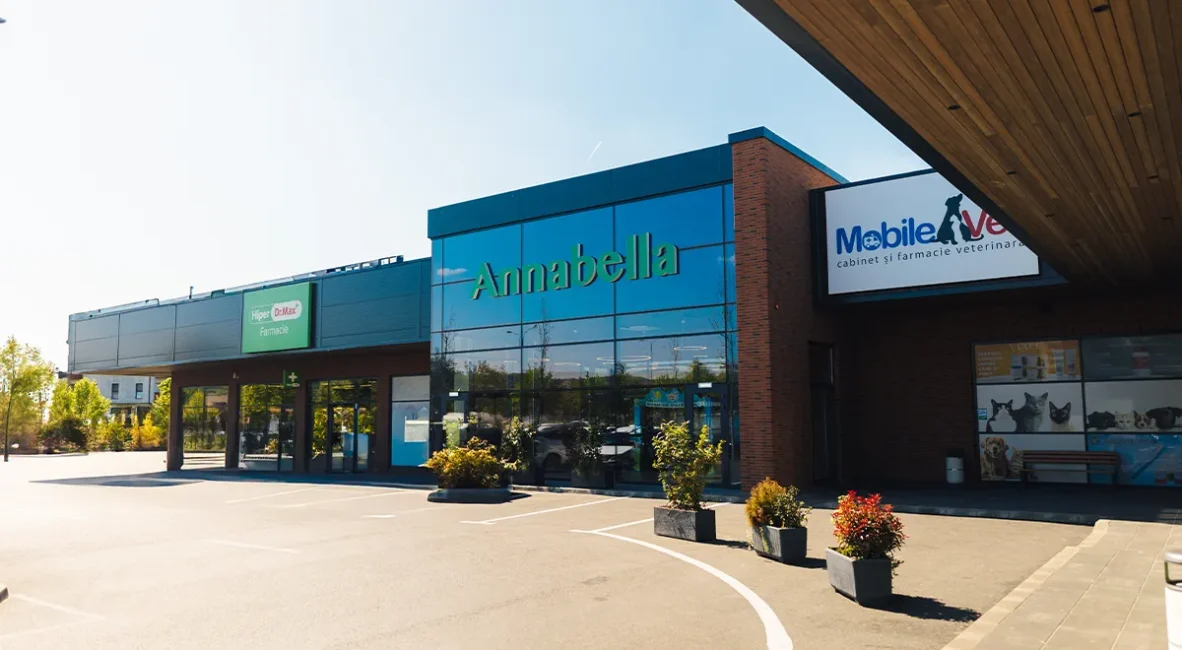
Channel letters and illuminated letters
Illuminated 3D letters are the workhorse of retail exteriors: legible day and night, dimensional enough to stop the eye, and premium enough to signal a serious business. They are the single highest-impact exterior investment for most stores. The full breakdown of types and construction is in our channel letters guide, and the business case — whether they actually pay back — is made in our piece on whether channel letters increase sales.
Fascia, projecting and blade signs
The fascia sign runs across the shopfront and carries the primary identity. Projecting or blade signs stick out perpendicular to the facade, catching people walking along the street before they are square-on to the shop. In a busy high street or mall, a blade sign is often what gets a store noticed from an angle the fascia never reaches.
Window signage: your highest-value real estate
The window is the most valuable advertising space a retailer owns, and the most under-used. It is seen by everyone who passes, costs nothing per view, and speaks at the exact moment a decision to enter is made.
Vinyl graphics turn glass into a message: promotions, brand, opening hours, product. Used well, the window frames what is inside and pulls people through the door. Increasingly, retailers put a bright digital display in the window instead — dynamic content that changes with the promotion, far harder to ignore than static glass. We cover that route in detail in our article on the retail LCD screen. The principle holds either way: a working window is a salesperson; an empty one is a missed one.
In-store and POS signage: guiding and selling inside – Retail Signage
Once the customer is in, signage stops attracting and starts converting. This layer is quieter but does real commercial work.
Department and category signs help people find what they came for without asking. Promotional and shelf signage push specific products at the point of decision. Point-of-sale signage at the till drives the last-minute add-on. Done well, in-store signage reduces friction and lifts basket size at the same time. Done badly, it is visual noise that makes a store feel cluttered and cheap.
The rule is restraint: every in-store sign should earn its place by either guiding or selling. If it does neither, it is clutter.
Retail wayfinding: moving customers through the space
In anything larger than a single room — a department store, a multi-floor flagship, a shopping centre unit — customers need to be guided. Retail wayfinding is the signage that does it: directories, directional signs, floor and zone markers.
Good wayfinding is invisible when it works and infuriating when it does not. It keeps customers moving, reduces the friction that makes people give up and leave, and quietly extends the time they spend in the store. For larger formats and mall environments, this is a discipline in its own right, closely tied to custom fabrication.
Digital retail signage: dynamic where it counts
Digital signage is not a replacement for the rest — it is a layer you add where movement earns attention. A screen in the window, a menu board in a food retail setting, a promotional display at the entrance. The advantage is flexibility: content changes without reprinting, and motion pulls the eye where static cannot.
The trap is using it everywhere. A store wallpapered in screens feels like an airport, not a shop. Digital works best as an accent on the highest-traffic touchpoint, not as the whole strategy.
The rollout problem: consistency across locations
This is where retail signage gets genuinely hard, and where most programmes fall down. One store is a project. Fifty stores is a system that has to stay identical while being made and installed over months, often by different hands.
Inconsistency is what customers notice without being able to name it: the same brand, but the letters are a slightly different white in Manchester than in Rotterdam, the finish is off, one store’s sign has already got a dead LED. That drift erodes exactly the trust the signage was meant to build.
The fix is upstream, in sourcing. When every location’s signage comes from one manufacturer, made to one spec, on one production line, consistency is built in rather than chased. This is where sourcing factory-direct from an EU manufacturer changes the economics: CE-compliant production, delivered duty-free across the single market at Eastern-European cost, with the margin and lead times a rollout needs. For the deeper argument on choosing that partner, see our guide to selecting a signage supplier. Consistency at scale is not a design problem. It is a manufacturing one.
For a reseller or agency, this is also where an account is won or kept. A brand that trusts you to deliver ten stores identically will trust you with the next forty. The reverse is just as true: one visibly mismatched storefront on a rollout, and the client starts questioning everything else. Owning a reliable manufacturing route is not a back-office detail — it is the thing that turns a one-off order into a standing relationship.
Build quality: what makes retail signage last
A retail sign is on display every hour the store exists. Cheap builds show it. LED modules that fail one by one, faces that yellow, metal that rusts at the fixings — each of these turns a signage investment into a liability that sells against the brand.
The materials decide the lifespan. Quality LED modules and acrylic for illuminated work; correctly specified metal for fabricated and exterior pieces. We cover the fabricated route in custom metal signs and the acrylic route in acrylic signs. For a retailer, the calculation is simple: the sign that costs less today but looks tired in eighteen months is the expensive one.
Frequently asked questions
What types of retail signage are there? Five layers: exterior (channel letters, fascia, blade signs), window (vinyl graphics, digital displays), in-store and POS (category, promotional, shelf, till), wayfinding (directories and directional signs), and digital signage. Each does a different job, and they work best as a coordinated system.
What drives the cost of retail signage? Material and build quality, size and quantity, illumination, and — for chains — the number of locations. The biggest hidden cost is inconsistency and early failure: signage that has to be remade or repaired costs far more than getting the specification and the manufacturer right the first time.
How do I keep retail signage consistent across multiple stores? Source from a single manufacturer, made to one specification, on one production line. Consistency across locations is a sourcing decision, not a design one. A factory-direct EU manufacturer can hold the same spec, finish, and quality across an entire rollout.
Who should a retail brand or reseller source signage from? A manufacturer that produces in-house, uses quality components, is CE-compliant for the EU market, and can scale from one store to a full rollout without quality drifting. Owning production is what makes consistent, on-time delivery possible.
Conclusion: build the system, source it once
Retail signage works when every layer — facade, window, interior, wayfinding, digital — says the same thing in the same voice. A single great sign on a chaotic storefront underperforms a coordinated system where each part does its job. And for a brand or reseller working across locations, the hardest part is not the design. It is keeping that system identical, store after store.
That is a manufacturing question before it is a creative one. Get the specification right, and source it from one factory that can hold it.
VIZAL manufactures the full range of retail signage in-house — illuminated, metal, acrylic, and digital — factory-direct in the EU, white-label, with 25 years of production behind it. You can see the work across retail, hospitality, and jewellery clients in our portfolio. Tell us about the store or the rollout and we will come back with a system built to stay consistent, location after location.