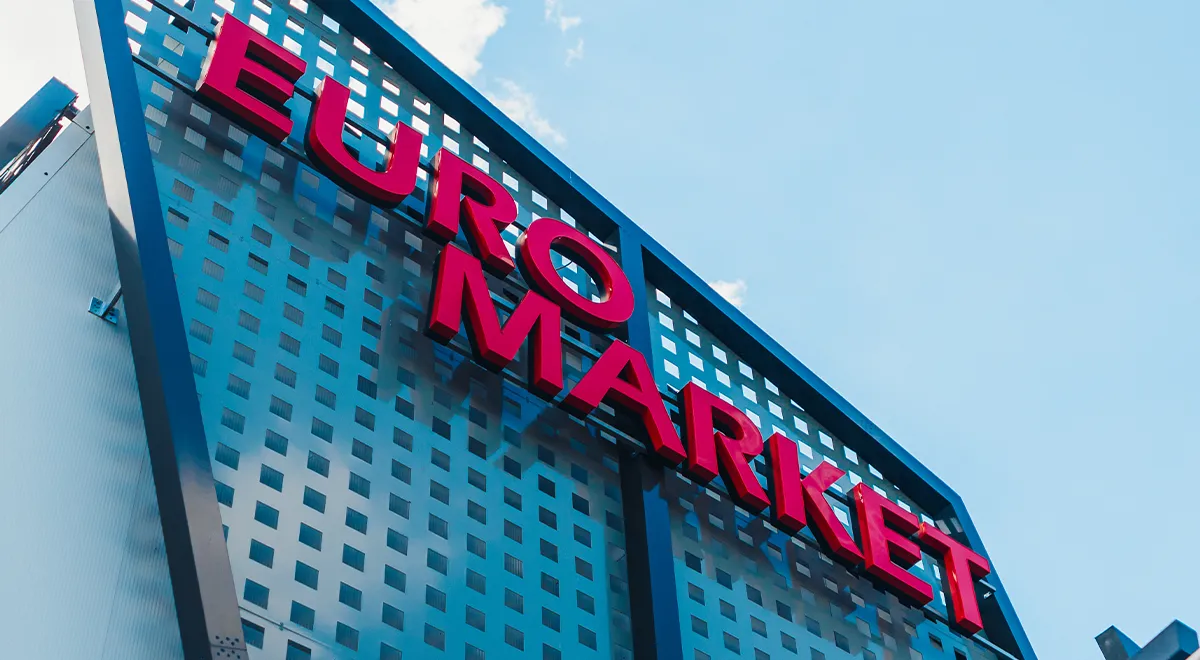
Channel letters are the signs you’ve walked past ten thousand times without naming.
The illuminated, three-dimensional letters on the front of almost every storefront, mall unit, and office facade — that’s what they are. In the US the trade calls them channel letters; in Europe you’ll more often hear “illuminated 3D letters.” Same product, two names. And because they’re the most common form of exterior brand signage in the world, getting the details right — the type, the materials, the lighting — is what separates a sign that looks sharp for ten years from one that looks tired in two.
This is a practical guide to what channel letters actually are, the main types, what they’re built from, and how to choose the right specification for your project — whether you’re a business owner buying for your own storefront or a reseller sourcing them for clients.
What are channel letters?
A channel letter is a fabricated, hollow letter shaped to hold a light source inside it. “Channel” refers to the U-shaped cavity that houses the LEDs.
Each letter is built from a few standard parts, and knowing them makes every quote easier to read:
- Face — the front surface, usually acrylic, that the light shines through.
- Return — the side walls that give the letter its depth.
- Trim cap — the trim that frames the face and holds it to the return.
- Backer — the rear panel the letter is mounted to (for reverse-lit and mounted-panel styles).
The construction sounds simple, but the quality lives in the detail: how cleanly the returns are formed, how the face is bonded, whether the LEDs are spaced to light the letter evenly. Cheap letters cut corners exactly there — and it shows the first night the sign is switched on.
The main types of channel letters
They’re classified by how they’re lit. The illumination style changes the look, the cost, and where the sign works best.
Front-lit
The classic. Light shines out through a translucent acrylic face, so the letter glows directly. Highest daytime and nighttime visibility, and the most versatile choice for retail and storefront work. If you picture a lit-up shop sign, this is usually it.
Halo-lit (back-lit / reverse)
The face is opaque and the light escapes from the back of the letter, throwing a halo of light onto the wall behind it. The effect is subtle and premium — the letters read as solid by day and float on a glow by night. Popular with corporate, hospitality, and luxury brands that want understatement over brightness.
Front-and-back lit (combination)
Both at once: a lit face and a halo behind. The most dramatic — and the most expensive — option, used where a brand wants maximum presence on a large facade.
Open-face
The face is left off (or clear) so the LEDs are visible inside, giving an exposed, retro look reminiscent of classic neon. A styling choice more than a visibility one.
Trimless / seamless
A premium build where the trim cap is eliminated for a cleaner, frameless face. More work to fabricate, sharper result. Common on high-end retail where finish is everything.
What channel letters are made of
Three materials do most of the work, and the grade of each decides how the sign ages.
Acrylic for the face — it diffuses light evenly and holds color. Quality acrylic resists yellowing and cracking under UV; cheap sheet does not, which is why bargain signs fade. Aluminium for the returns and backs — light, weatherproof, and formable, the standard for exterior work. And LED modules inside — the single biggest driver of how long the sign lasts and how evenly it lights. Low-grade LEDs fail in patches and shift color; quality modules, run at the right power, hold output for years. The efficiency and lifespan gap between LED grades is real and well documented — see the US Department of Energy on LED performance for the underlying data.
For a business, the takeaway is simple: the unit price that looks cheap usually cut the acrylic grade or the LEDs. That saving becomes your repair bill.
Channel letters vs 3D letters vs flat lettering
The terms get used loosely, so here’s the clean version.
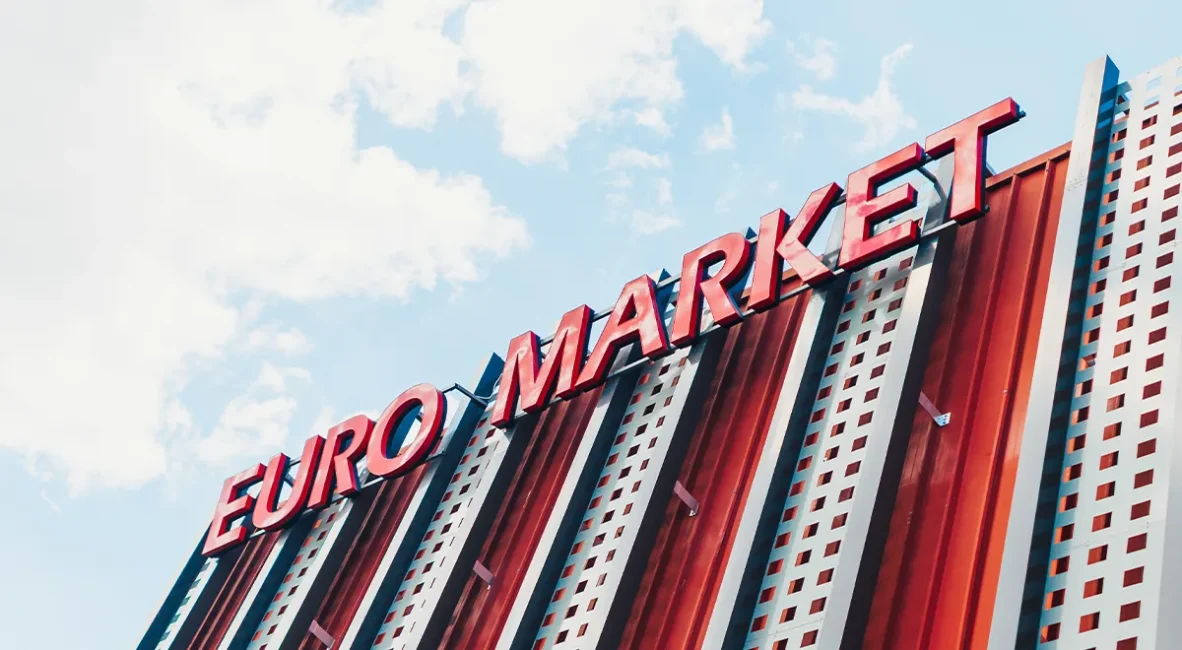
Channel letters and illuminated 3D letters are the same thing — regional vocabulary, as covered above. If a European supplier quotes you “3D letters” and an American one quotes “channel letters,” they’re quoting the same product. We go deeper on the illuminated 3D letter side in our guide to outdoor 3D letters and why your facade is your most valuable marketing asset.
What’s genuinely different is flat-cut (dimensional) lettering — solid letters cut from acrylic, metal, or PVC with no internal cavity and no illumination. Cheaper, good for interiors and non-lit facades, but without the night-time presence they give you. Choosing between them comes down to one question: does the sign need to be seen after dark?
How to choose channel letters for your project
The right specification depends on four things.
Viewing distance and size. A sign read from across a car park needs bigger letters and stronger illumination than one above a mall unit. Undersize it and the investment is wasted; oversize it and you’ve overpaid.
Indoor or outdoor. Exterior letters need weatherproof aluminium returns, sealed construction, and outdoor-rated LEDs. Interior letters can be lighter and cheaper.
The look you want. Front-lit for maximum visibility and value, halo-lit for a premium and understated feel, combination for a statement facade.
Budget over the full life, not the first invoice. A quality build with a proper guarantee costs more up front and less over ten years. We produced the channel letter signage for Greenfield in Bucharest exactly on that principle — built to hold up, not to look good only on day one.
If you want the wider decision framework across sign types, our guide to choosing the right signage for your brand covers it. To see specs and options, the outdoor 3D letters range lays them out.
Sourcing channel letters: for businesses and resellers
Where you buy matters as much as what you buy.
For a business owner, buying direct from a manufacturer means factory pricing and a single point of accountability — no broker markup, no finger-pointing when a repair is needed.
For a reseller, sign shop, or agency, channel letters are a core product to resell, and the sourcing logic is sharper still: every middleman between you and the factory took the margin you were counting on. Buying direct from an EU manufacturer also means EU build quality at Eastern-European cost, delivered duty-free across the single market in days. We cover the full reseller sourcing case in how resellers should choose their signage suppliers.
Frequently asked questions
What is the difference between channel letters and 3D letters?
There isn’t one, in practice. “Channel letters” is the common US and international term; “illuminated 3D letters” is more common in Europe. Both describe fabricated, hollow, internally lit letters. Flat-cut dimensional letters — solid and non-illuminated — are the genuinely different product.
How long do LED channel letters last?
With quality LED modules and acrylic, the LEDs typically run for many years before noticeable output drop, and the letter housing lasts far longer. Lifespan is driven almost entirely by component grade and how hard the LEDs are driven — the reason cheap signs fail early and quality ones don’t.
Front-lit or halo-lit — which should I choose?
Front-lit for maximum visibility and the best value, ideal for retail and storefronts. Halo-lit for a premium, understated look, favored by corporate, hospitality, and luxury brands. Combination lighting does both, at a higher cost.
Can I resell or white-label channel letters?
Yes. As a manufacturer we supply resellers, sign shops, and agencies with them at factory pricing, produced unbranded on request so the finished work carries your name.
The bottom line
Channel letters are the default face of exterior branding for a reason: nothing else combines visibility, durability, and brand presence as well. The decisions that matter aren’t complicated — the illumination type, the material grade, the LED quality, and who you buy from. Get those right and the sign works, and keeps working.
Want channel letters produced in the EU, at factory prices, with a two-year guarantee? Contact VIZAL with your project or product mix and we’ll come back with specs and pricing.