

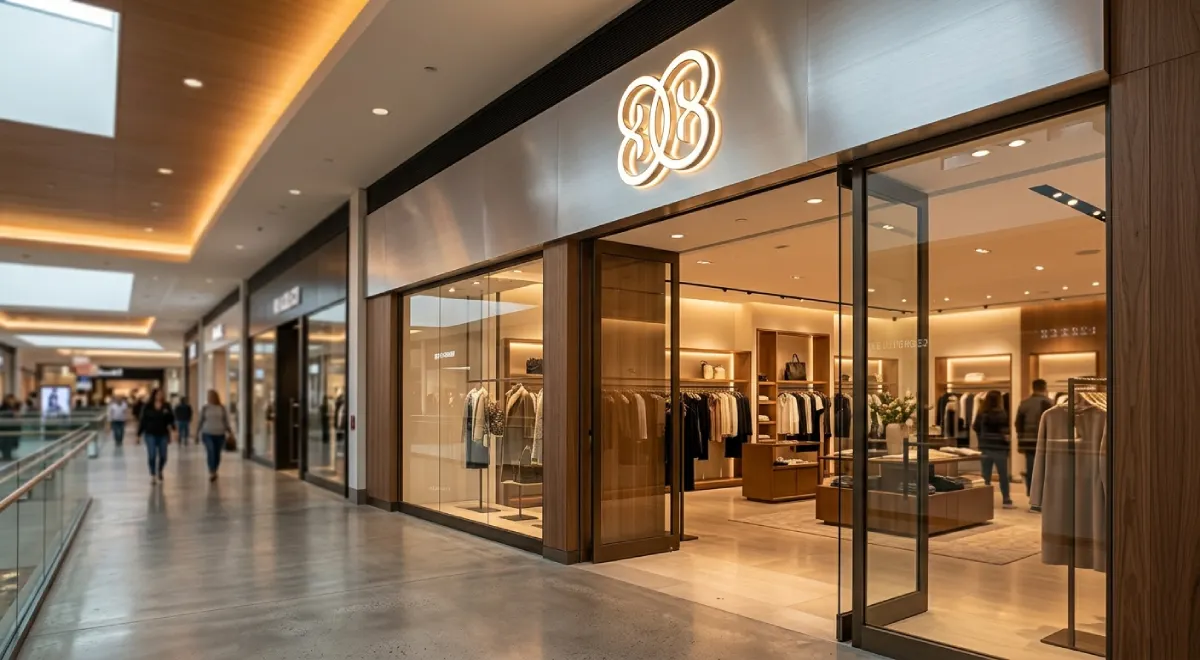
You spent months negotiating the lease. You invested in fixtures, inventory, staff. Then you opened — and foot traffic never came. The problem isn’t your location. It isn’t the mall. It’s your mall signage.
The location isn’t the problem. The mall isn’t the problem. Your mall signage is.
If shoppers walk past your store without stopping, without noticing, without even glancing — your sign failed before your business had a chance. This article explains what actually makes mall signage work, which solutions perform best in retail environments, and what separates brands that fill their stores from brands that wonder where their customers are.
What Mall Signage Actually Does (Beyond Decoration)
Most business owners treat signage as the last item on the fitout checklist. A logo. A name. Done.
That’s where the money starts leaking.
Effective mall signage doesn’t just identify your store — it interrupts attention, communicates brand value, and converts passing traffic into entry. In a mall corridor where dozens of brands compete for the same eyes, your sign is your first — and sometimes only — salesperson.
Research on retail visual communication consistently shows that illuminated signs increase storefront recognition significantly compared to non-illuminated alternatives. In high-footfall environments like shopping centers, where ambient light is controlled and uniform, illumination is the primary differentiator.
Three things your mall signage must do:
- Stop the right people — communicate your category and positioning at a glance
- Build recognition — consistent visual identity that shoppers remember and return to
- Convert attention into entry — create enough curiosity or clarity to trigger a decision
If your sign doesn’t do all three, it’s doing almost nothing.
The Main Types of Mall Signage — And When to Use Each
Channel Letters (Litere Volumetrice)
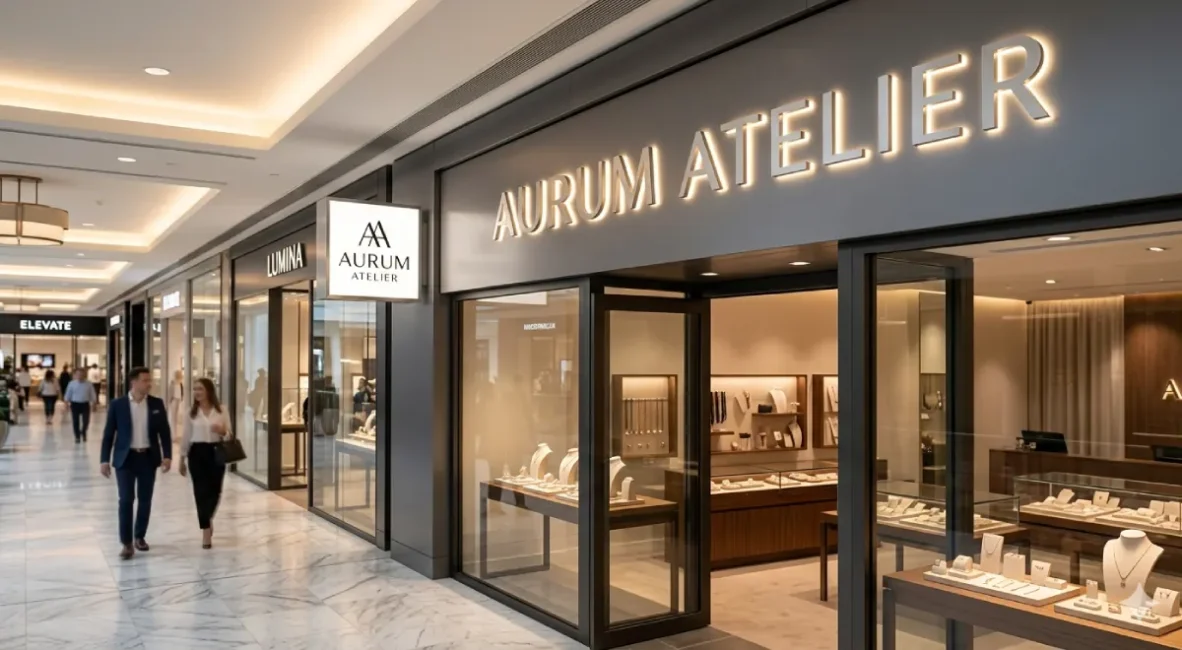
Channel letters are the industry standard for primary storefront identification in malls. Individual three-dimensional letters, custom fabricated in aluminum, illuminated from inside with LED modules.
Why they work in mall environments specifically:
- Visible from 15–30 meters even in crowded corridors
- Frontlit, backlit (halo), or combination — each creates a distinct brand atmosphere
- Scale precisely to fascia dimensions without losing legibility
- Premium material finish communicates brand positioning before the customer reads the name
At VIZAL, channel letters are produced with custom return depth, face material (acrylic, aluminum composite, painted steel), and LED density calibrated to the location’s light conditions. A jewelry brand in a high-end mall wing needs different execution than a fast-casual restaurant at the food court — same product category, entirely different specification.
Explore our outdoor 3D letters →
Lightboxes (Casete Luminoase)
Where channel letters communicate identity, lightboxes communicate message. A lightbox is an illuminated frame with a translucent face — either static or interchangeable graphics — that delivers high-visibility advertising in confined or recessed fascia positions.
In mall contexts, lightboxes are most effective for:
- Secondary brand messaging alongside primary channel letters
- Food and beverage menus visible from corridor distance
- Promotional campaigns that need visual weight without full-fascia access
- Window-facing installations where direct light hits reduce visibility of non-illuminated graphics
Double-sided lightboxes placed perpendicular to the mall corridor (blade signs) are particularly effective in straight-corridor layouts where end-facing fascia has limited return visibility.
LED Displays (Digital Signage)
Static signs communicate who you are. LED displays communicate what you’re offering — right now.
In high-traffic mall environments, dynamic content captures 4–5x more attention than static equivalents. This matters most for brands with frequent promotions, seasonal offers, or multiple product categories that can’t all compete for one static sign.
VIZAL’s LED display solutions cover window-facing screens, wall-mounted configurations, and standalone units. The most common mall application: a high-brightness window display visible from the corridor, cycling through current campaigns without any print production cost.
Wayfinding Signage (Interior Navigation)
Once a customer enters, the job isn’t finished.
Large-format retail, multi-level stores, or concept spaces with multiple zones need interior navigation systems that maintain brand consistency while reducing shopper friction. Lost customers leave. Confused customers don’t buy.
Premium wayfinding — as executed for The Marmorosch hotel and Sweat Gym in Bucharest — integrates brand materials (brass, anodized aluminum, custom typefaces) with clear functional hierarchy.
What Differentiates High-Performance Mall Signage
Illumination Strategy
Not all illuminated signs are equal. The choice between frontlit, backlit, and edge-lit affects perception before it affects readability.
- Frontlit channel letters — clean, bold, maximum legibility. Standard for most retail categories.
- Backlit / halo illumination — creates a light halo around the letter form. Signals premium positioning. Jewelry, cosmetics, lifestyle brands.
- Combination — frontlit face with halo backlight. Maximum dimensionality and presence.
LED module selection matters here. Low-density modules produce visible hotspots. Uniform illumination requires appropriate CC distance and module power calibrated to the face depth and material diffusion. At VIZAL, we specify Baltled, SloanLED, and Principal LED modules based on the project’s light output requirements and longevity expectations.
Materials and Finish
In a mall environment, shoppers are at arm’s reach from your fascia. Material quality is readable.
Brushed aluminum returns. Mirror-polished acrylic faces. Custom RAL powder coating. Stainless trim cap. These details aren’t decoration — they’re brand signals that communicate whether a business invested in its presence or cut corners.
For clients like Teilor (indoor signage, Bucharest) and DAAR beauty concept stores, the brief was never “we need letters.” It was: the sign has to reflect the brand’s actual market positioning. The execution follows from that.
Compliance and Mall Regulations
Every shopping center has a signage manual — dimensions, material restrictions, illumination levels, fascia coverage percentages. Non-compliant signage gets rejected or forced to retrofit, which costs more than getting it right the first time.
VIZAL works directly from mall signage manuals during the design and production phase, not after. Drawings submitted for approval reflect actual production specifications. This eliminates revision cycles and delays that push installation past lease start dates.
Common Mistakes in Mall Signage Projects
Treating signage as a commodity. Lowest quote wins. Then the sign arrives, the illumination is uneven, the return depth looks cheap, and the material finish doesn’t match the brand’s other assets. Price is a poor filter for signage quality.
Ignoring the corridor viewing angle. Fascia signs are designed to look good in the photograph. But shoppers approach from 30–40 meters at a 15-degree angle. If the sign isn’t legible from that approach angle, it fails the only test that matters.
Disconnected interior and exterior. A premium exterior sign that leads to a generic interior undermines the impression it built. Brand consistency across fascia, interior 3D letters, wayfinding, and display units compounds the effect. Fragmenting the project across multiple vendors fragments the result.
Underestimating lead times. Custom signage — channel letters, lightboxes, totems — requires production time. Rush jobs introduce quality compromises. Planning signage alongside fitout, not after, avoids that pressure.
VIZAL’s Approach to Mall Signage Projects
VIZAL has been producing illuminated signage for over 25 years. The client list includes retail brands, HoReCa groups, corporate identities, and property managers across Romania — from independent stores to mall-located chains.
Projects like Euro Market (full indoor/outdoor signage package, Râmnicu Vâlcea), Annabella (outdoor signage and totems), and myGOLD (indoor signage for jewelry boutiques, Bucharest) represent the range: different categories, different environments, same standard of execution.
The process is direct. We review the mall signage manual, assess the fascia, propose a solution that meets approval requirements and serves the brand’s actual visibility objectives. Production is in-house — no outsourced fabrication, no quality gaps between design and delivery.
FAQ: Mall Signage
How long does mall signage production and installation take?
Standard channel letter projects — design, production, and installation — run 3–5 weeks from approved drawings. Complex projects with steel totems, custom materials, or multiple units require more time. For new mall openings or lease deadlines, the earlier the brief arrives, the more control we have over timeline.
What does professional mall signage cost?
Channel letter sets for a standard retail fascia (3–5 meters) typically range from €1,500 to €6,000+ depending on size, material specification, illumination type, and complexity. Lightboxes and LED displays vary by format and size. The right way to approach this: define the brief, get a production quote, evaluate it against the 10–15 year operational life of the sign.
Does VIZAL handle mall signage manual compliance?
Yes. Every project starts with a review of the mall’s signage regulations. Submitted drawings reflect actual production specs. We handle the approval documentation and coordinate directly with the mall’s technical team where needed.
Can existing signage be retrofitted or upgraded?
In most cases, yes. LED module replacement, face material refresh, or illumination system upgrades can significantly extend the life and improve the performance of existing channel letter sets without full replacement.
The Decision
Your mall signage either works or it doesn’t. It either stops people or it doesn’t. It either justifies the investment or it becomes part of the overhead.
If you’re opening a new store, launching a rebranding, or looking at a fascia that isn’t performing — the conversation starts with a brief.
Contact VIZAL for a mall signage quote →
Explore our commercial signage solutions →