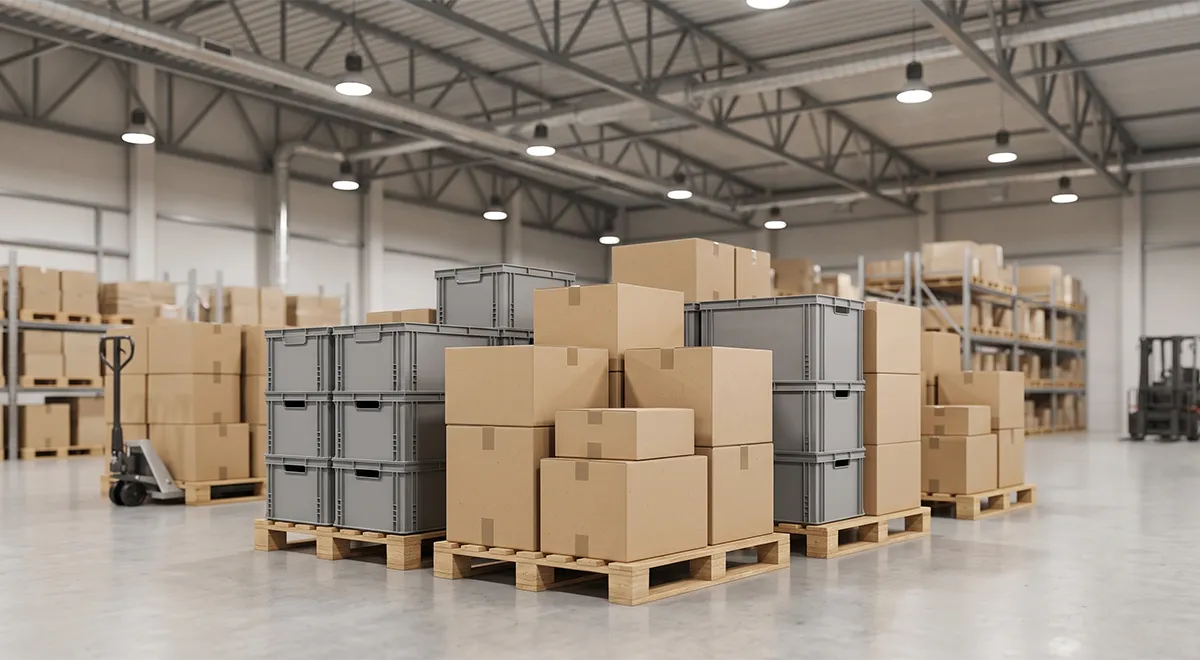
Here is the reseller’s dilemma. You win the client, handle the design, manage the project — but you do not own a factory. So you buy from someone who does. And the moment that supplier’s name lands on the packaging, the invoice, or worse, in front of your client, the relationship you built is at risk.
White label signage solves exactly this. It lets you sell manufactured signs as your own, from a factory the client never sees. This guide explains what white label signage really is, how the model works in practice, and how to tell a partner who will stay invisible from one who will eventually cut you out.
What white label signage actually means
White label signage is signage produced by a manufacturer, unbranded, so the reseller can sell it under their own name. The factory makes the product. Your brand goes on it. The client deals only with you.
Nothing on the finished sign, the packaging, or the paperwork points back to the manufacturer. There is no logo on the crate, no factory name on the delivery note, no marketing insert. As far as the end client knows, you made it. That is the entire point: the manufacturing capability is theirs, but the customer relationship stays yours.
It is the same model that runs quietly under most industries — the white label product concept applies to signage exactly as it does to software or food. The reseller sells the outcome; the manufacturer stays behind the curtain.
How white label signage works in practice
The workflow is simple once the roles are clear.
You handle the front end: winning the client, the design, the specification, the project management, the invoice. The manufacturer handles production: cutting, fabricating, assembling, finishing, to your spec. The goods are then delivered either to you or directly to site, in neutral packaging with no factory branding, so you can install and hand over under your own name.
The details are what make it work. Neutral or your-branded delivery notes. No manufacturer marketing in the box. No direct contact between the factory and your client. Done properly, white label production is invisible by design — the client experiences one supplier, you, even though a factory they will never meet did the building.
Why resellers use white label
The model exists because it solves three real problems at once.
You own the client relationship
This is the one that matters most. A supplier who ships under their own name, or contacts your client “to confirm details,” is one step from becoming your competitor. White label removes that risk structurally. The factory cannot poach a client it never meets. Your relationship is protected by the model itself, not by a promise.
Manufacturing capability without a factory
Owning production means machines, materials, staff, space, and capital tied up before a single sign is sold. White label gives you the output of a factory with none of the overhead. You scale your product range by adding a partner, not a production line, and you can offer channel letters, metal signs, and light boxes without building the capability to make any of them.
Margin and scalability
Because you buy at manufacturing cost rather than through a broker’s markup, the margin is yours to set. And because the partner is a factory rather than your own limited workshop, you can take a fifty-store rollout without worrying whether you can physically produce it. The ceiling on what you can sell is no longer the ceiling of what you can build.
White label vs private label vs drop-ship
The terms get used loosely, so it is worth being precise.
White label means the same base product sold unbranded to multiple resellers, each applying their own brand. Private label usually means a product made or customised specifically for one reseller, exclusive to them. Drop-ship describes the logistics — the factory ships directly to the end client on your behalf — and it can apply to either model.
For signage, most reseller partnerships are white label with the option of blind drop-ship: standard capability, your brand on it, shipped neutrally. Genuine private label — bespoke, exclusive product lines — is possible with a manufacturer that has real in-house capacity, but it is a different conversation. Know which one you are asking for.
What to check in a white label partner
Not every manufacturer that says “white label” actually protects a reseller. Before you commit, confirm all of the following.
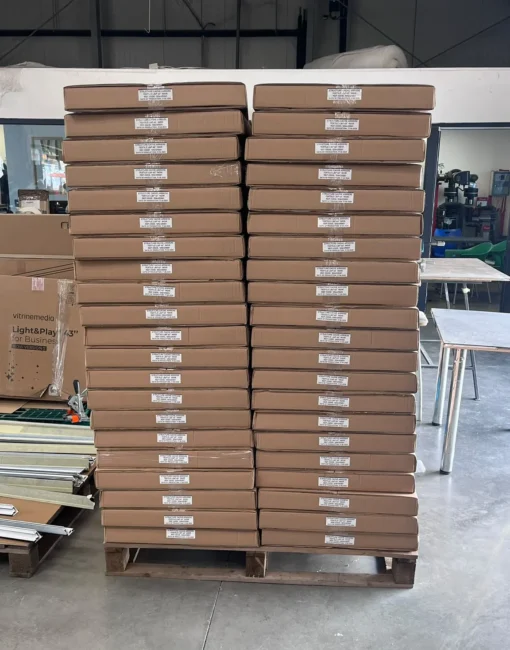
- They stay invisible. No factory branding on product, packaging, or paperwork. Neutral or your-branded delivery.
- No direct client contact. The factory never speaks to your client without you.
- Blind drop-ship, if you need it. Shipping to site under neutral or your labelling.
- Product range. Can one partner cover channel letters, metal, acrylic, and light boxes, so you are not managing five suppliers?
- CE compliance. Documented, for anything sold in the EU.
- Consistency at scale. The same spec and finish across a full rollout, not just the first order.
- Lead times and MOQ. Realistic on volume, and workable for both a single sign and a chain.
A partner built for resellers answers these without hesitation. The right sourcing questions overlap heavily with choosing any signage supplier — white label just adds the invisibility requirement on top.
Where white label breaks down
The model fails in predictable ways, and the failures are worth knowing before they cost you an account.
A factory logo slips through on a delivery note. The manufacturer emails your client “to clarify the artwork.” Branded packaging arrives on site in front of the customer. Or the partner simply cannot scale, and the quality drifts between the first store and the tenth. Each of these hands your client a reason, and a name, to go around you next time. When you vet a partner, you are really vetting for the absence of these — a manufacturer disciplined enough to stay behind the curtain every single time.
Why EU factory-direct white label wins
Where your white label partner is based changes the economics, not just the logistics.
A far-east white label supplier looks cheap until you add shipping weeks, customs, duties, currency risk, and the near-impossibility of fixing a bad batch on a client’s storefront a continent away. An EU manufacturer changes the maths: CE-compliant production, duty-free movement across the single market, and — from an Eastern-European base — a cost close to the far-east number without the exposure. You get margin that holds, lead times you can control on a rollout, and a factory you can actually reach when a client needs something fixed fast.
This is the same logic that makes a European channel letter manufacturer the stronger choice, and it is why serious multi-location work — the kind covered in our guide to retail signage — depends on keeping production in one reachable, consistent place.
Frequently asked questions
What is white label signage? Signage manufactured unbranded so a reseller can sell it under their own name. The factory produces the sign; the reseller’s brand goes on it; the end client deals only with the reseller. Nothing on the product, packaging, or paperwork identifies the manufacturer.
What is the difference between white label and private label signage? White label is a standard product sold unbranded to multiple resellers, each adding their own brand. Private label is a product made or customised exclusively for one reseller. Most signage reseller partnerships are white label, sometimes with blind drop-ship shipping.
Will a white label manufacturer contact my client? A proper white label partner never contacts your client directly and never puts its name on the product, packaging, or documents. If a manufacturer will not commit to that in writing, it is not a true white label partner.
Can one partner white-label across different signage types? A manufacturer with genuine in-house production can white-label channel letters, metal signs, acrylic signs, and light boxes from one source. That lets a reseller offer a full range without managing multiple suppliers. You can see the range we produce in-house in our manufacturing process.
Conclusion: the model is only as good as the discipline behind it
White label signage is how a reseller sells the output of a factory while keeping the client, the brand, and the margin. It gives you manufacturing capability without the overhead and protects your relationships by design rather than by promise. But the model is only as good as the manufacturer’s discipline to stay invisible, order after order.
Vet for that discipline, favour a factory you can reach, and buy at manufacturing cost rather than through a middleman.
VIZAL manufactures white label signage across channel letters, metal, acrylic, and light boxes — factory-direct in the EU, unbranded, CE-compliant, with 25 years of in-house production behind it. Your brand stays on the sign; we stay behind the curtain. See the work in our portfolio, then tell us about your clients or your rollout and we will come back with a partnership built to protect your margin and your name.