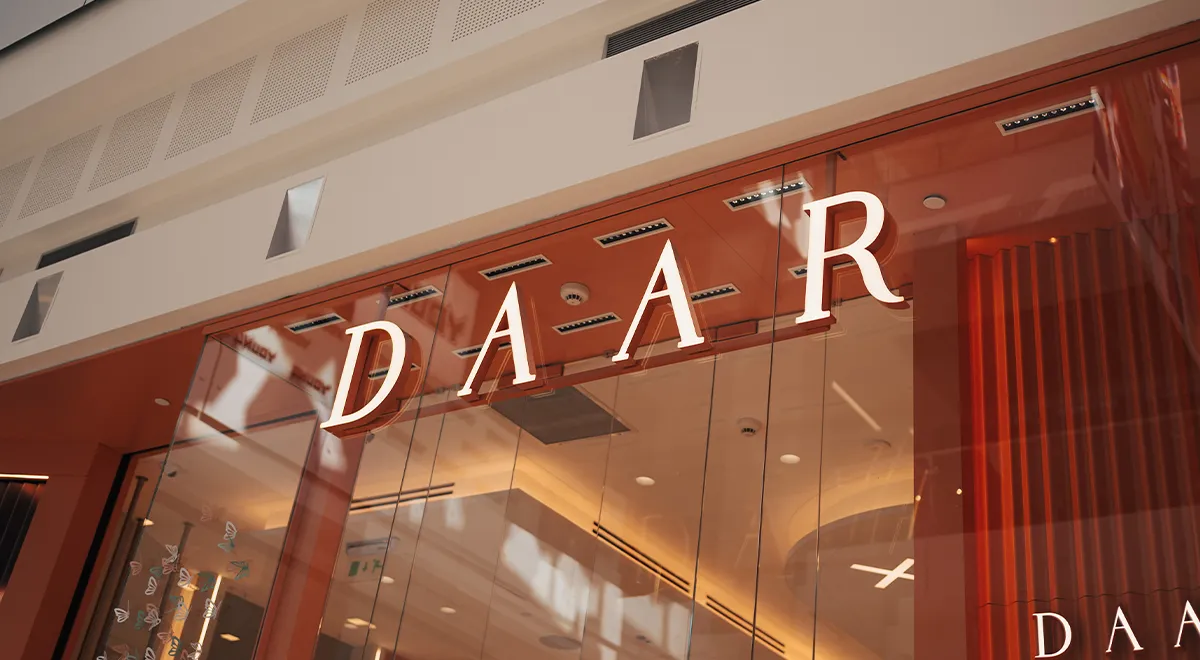
You spent money on your location. You spent money on your interior. Then you treated the commercial signage on the front like an afterthought.
That sign is the first thing a customer sees. Not your product, not your service, not your reviews. The sign. And if it’s dim, dated, or hard to read from across the street, people walk past without ever knowing you exist. You don’t lose those customers with a bang. You lose them silently, every single day, and you never see it on a report.
This is where most businesses get commercial signage wrong. They treat it as decoration when it’s actually your first salesperson — the one working 24 hours a day whether the door is open or not. This guide covers what commercial signage really has to do, the types that work, what they cost, and how to get signs that turn attention into customers instead of quietly wasting your budget.
What commercial signage actually is
Commercial signage is every sign that represents your business to the outside world — facade lettering, light boxes, totems, digital displays, storefront and interior signs. On paper, its job is simple: show your name.
In practice, it does more work than most advertising you pay for. It runs without a media budget. It doesn’t stop when your staff go home. And it reaches everyone who passes — not a targeted audience you paid to reach, but real foot traffic already in front of you.
That’s why the International Sign Association’s research on on-premise signage treats it as one of the most cost-effective forms of advertising a business owns. You pay once. It sells for years.
But only if it’s built to.
Why most commercial signage fails
Here’s the uncomfortable part. Most commercial signs don’t fail because the design was bad. They fail because the decision behind them was.
Businesses chase the lowest price, order from whoever is fastest, and never ask the questions that matter. Six months later the white has yellowed, one LED module has gone dark, and the facade that was supposed to look premium looks neglected. The sign is still up. It’s just working against you now.
The common mistakes are always the same:
- Buying on price alone. Cheap materials fade, cheap LEDs fail, and the replacement costs more than doing it right the first time.
- Wrong type for the location. A beautiful sign nobody can read from the road is a wasted sign.
- No consistency across locations. If you run more than one site and the whites don’t match, customers notice before you do.
- Treating it as a one-time purchase instead of a business asset. Signage that lasts two years costs you more than signage that lasts ten.
You’re responsible for your own visibility. The good news is that every one of these mistakes is a decision — which means every one of them is fixable.

The types of commercial signage that actually work
Different parts of your business need different signs. Most companies end up needing a mix, and getting them from one place is what keeps everything consistent.
Channel letters and 3D lettering
Illuminated volumetric letters — frontlit, backlit halo, or both — are the workhorse of commercial signage. They turn your name into a brand mark on the facade, read well by day, and command attention at night. The quality of the light is what separates a premium look from a cheap one. See the full outdoor signs range for options.
Light boxes
Single- or double-sided illuminated boxes for facades, projecting signs, and interior branding. Reliable, versatile, and the right choice where you need a clean lit surface rather than individual letters.
Totems and pylon signs
Freestanding commercial signage for car parks, retail parks, dealerships, and multi-tenant buildings. A steel totem is often what a customer sees first from the road — before the building itself — so it carries more of your brand than its size suggests.
LED and digital displays
Dynamic commercial signage for windows, walls, and standalone use, where you want to change the message, not just show the name. LED displays let you promote offers, rotate content, and stay visible day and night.
Indoor and wayfinding signage
Reception logos, interior branding, and directional signs. The commercial signage customers see up close — which is exactly why the finish has to survive inspection, not just a glance from the street. See the indoor signs range for interior options.
Not sure which type fits your business? Our guide on how to choose the right signage for your brand walks through it.
Quick comparison
| Type | Best for | Visibility | Works at night |
|---|---|---|---|
| Channel letters / 3D | Facade branding, storefronts | High | Yes (illuminated) |
| Light boxes | Storefronts, projecting signs | High | Yes |
| Totems | Roadside, car parks, dealerships | Very high | Yes |
| LED displays | Changing messages, offers | Very high | Yes |
| Indoor / wayfinding | Interiors, navigation | Close-range | Optional |
What makes commercial signage worth the investment
Here’s the reality most price lists hide: “cheaper” stops being cheaper the first time a sign fails on your facade.
Commercial signage that performs is an outdoor product engineered like one. That means materials rated for real weather, LED modules built for the hours you’re actually running, and finishes that match the render instead of drifting a shade off. It’s the difference between a sign that still looks like your brand after five years and one that fails in its second.
Where it’s made matters just as much as what it’s made of. You have three ways to source commercial signage: import it cheap from far away, split it across small local vendors, or buy direct from a real manufacturer. For anything above a single small sign, the manufacturer wins.
Direct pricing. Buy through a reseller or a broker and someone already took a margin before it reached you. Buy from the manufacturer and you pay for the sign, not the chain of hands it passed through.
Consistency you can count on. In-house production means the same white, the same depth, and the same finish across every location. That consistency is what cheap sourcing can’t hold — and what a multi-location brand can’t afford to lose.
Speed and accountability. European manufacturing means weeks, not months, and a factory that picks up the phone when something needs fixing — not a support ticket in another time zone.
Proof: businesses that chose to be seen
Anyone can show one flattering photo. What matters when you’re spending real money on commercial signage is whether the manufacturer holds up across demanding brands, over years.
VIZAL produces for names that don’t tolerate a weak finish — Teilor and myGOLD in premium jewelry, The Marmorosch in luxury hospitality, Emerson on the corporate side. Jewelry retail in particular is an unforgiving test: the lighting has to be flawless, or it reads cheap on a product that isn’t.
The partnerships say more than the projects. CAZICOM has worked with us for over ten years. Stil Diamonds calls us “more than a supplier — a trusted long-term partner.” Kilowat has stayed with us for years across prints, wraps, and illuminated signs. We built the LED display for Movieplex cinema and the steel totem for the MG Motors dealership — the kind of high-visibility work that anchors a whole location. See the range in our portfolio.
How to get commercial signage that performs
For a business sourcing its own commercial signage, the process should be simple — because complexity is where budget leaks.
- Send the brief. Your logo, your locations, and what you’re trying to achieve.
- Get a proof. We show you the sign before we cut anything. No surprises on the facade.
- We produce and install. In-house, to European standards, backed by a two-year guarantee.
- You grow. Because we cover letters, light boxes, totems, LED, and interior signage in one place, you handle one storefront today and a full roll-out next year — with the same partner and the same finish on every site.
Frequently asked questions
How much does commercial signage cost?
Cost depends on the type of sign, its size, the materials, and how many locations you’re covering. Illuminated channel letters and light boxes sit in the mid-range; totems and LED displays cost more. Buying direct from the manufacturer removes the reseller margin, so you pay for the sign itself. Send your scope and you get a firm quote before you commit.
What is the best type of commercial signage?
It depends on where the sign goes. Channel letters or a light box are standard for a storefront facade; a totem works where customers see you from the road first; LED displays suit businesses that want to change the message. Most businesses use a mix — which is why sourcing from one manufacturer keeps it consistent.
How long should commercial signage last?
Well-made exterior commercial signage lasts many years — the LEDs and materials decide it. European-grade modules and weather-rated finishes are what separate a sign that still performs after five years from one that fails in its second. If a supplier won’t back it with a guarantee, that tells you what they expect.
The bottom line
Commercial signage isn’t a line item. It’s a decision about whether customers notice your business or walk past it.
If people don’t see you, they don’t remember you. If they don’t remember you, they don’t buy. That’s the whole game — and your sign is the part of it working around the clock. Order it cheap and you gamble on quality and timing. Source it from a European manufacturer built for demanding brands — direct pricing, two-year guarantee, one partner for the whole range — and the visibility, the consistency, and the customers stay yours.
Get commercial signage that actually gets you noticed. Contact VIZAL with your brief and locations, and we’ll come back with pricing and a firm lead time.