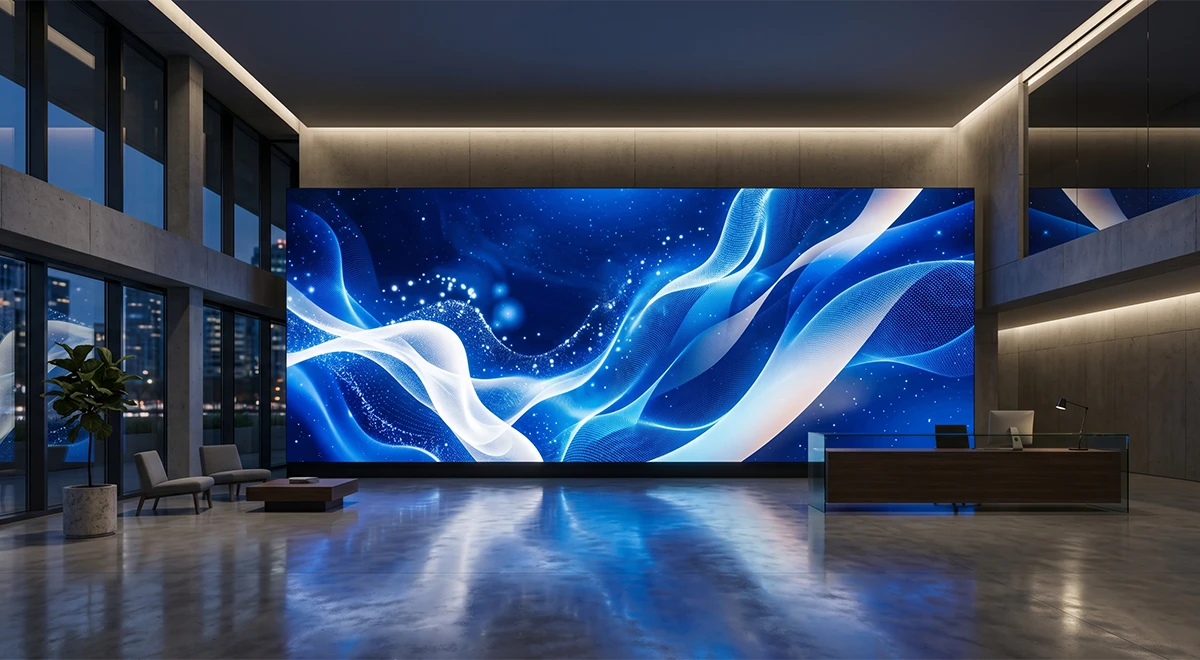
A well-chosen LED wall does something no other display format can: it commands attention from across a room, from across a street, or from across a crowded exhibition hall. It scales from a conference room to a stadium facade without losing impact. And when specified correctly, it delivers visibility that pays for itself in foot traffic, engagement, and brand authority.
But here is the uncomfortable truth most suppliers will not tell you. The majority of businesses overspend on their first LED wall — or worse, under-spec it and end up with a display that looks dim, pixelated, or outdated within two years. The reason is simple: LED wall pricing, pixel pitch specs, and installation requirements are rarely explained in plain business terms.
This guide fixes that. It walks you through how to evaluate an LED wall as a business investment — what to specify, what to avoid, and how to calculate whether it will actually deliver returns for your specific use case.
What Is an LED Wall and Why It Matters for Business Visibility
An LED wall — also called an LED video wall or LED display wall — is a large-format digital screen built from modular LED panels tiled together to form a single continuous display. Unlike traditional LCD screens, an LED wall has no bezels between modules, which means the image flows edge to edge at any size you specify.
The Business Case Behind the Technology
LED walls replaced projection systems, banner prints, and segmented LCD video walls for one reason: measurable impact. Motion, brightness, and scale make them impossible to ignore — and attention is the single most valuable resource in any commercial environment.
A static sign or a printed banner delivers one message for the duration of its life. An LED wall delivers thousands of messages, tailored to time of day, audience, promotion cycle, or event schedule. That flexibility is not a feature — it is a multiplier on every marketing euro the business spends offline.
Where LED Walls Outperform Every Alternative
LED walls are the right choice when three conditions apply: the viewing audience is larger than a single screen can reach, the environment demands high brightness (sunlight, large venues, open lobbies), or the business needs a dynamic surface that can display anything from brand campaigns to live data feeds.
This is why retail flagships, corporate headquarters, automotive showrooms, hospitality venues, broadcast studios, and stadiums have standardized on LED wall technology. They are not buying a screen. They are buying a permanent marketing asset with a 7-to-10-year operational lifespan.
Indoor LED Wall vs Outdoor LED Wall: The First Decision That Matters
Before pricing, before pixel pitch, before anything else — the environment defines the entire specification.
Indoor LED Walls
Indoor LED walls are designed for controlled lighting environments: retail interiors, corporate lobbies, boardrooms, broadcast studios, hotel atriums, event halls, and reception areas. They prioritize image sharpness over raw brightness, typically operating in the 600 to 1,500 nits range. That is more than enough for any indoor setting without creating visual fatigue or glare.
Pixel pitch for indoor applications is tight — usually between 1.2mm and 3.9mm — because viewers are close to the screen. The closer the viewer, the smaller the pixel pitch needs to be for the image to remain clean and sharp.
Outdoor LED Walls
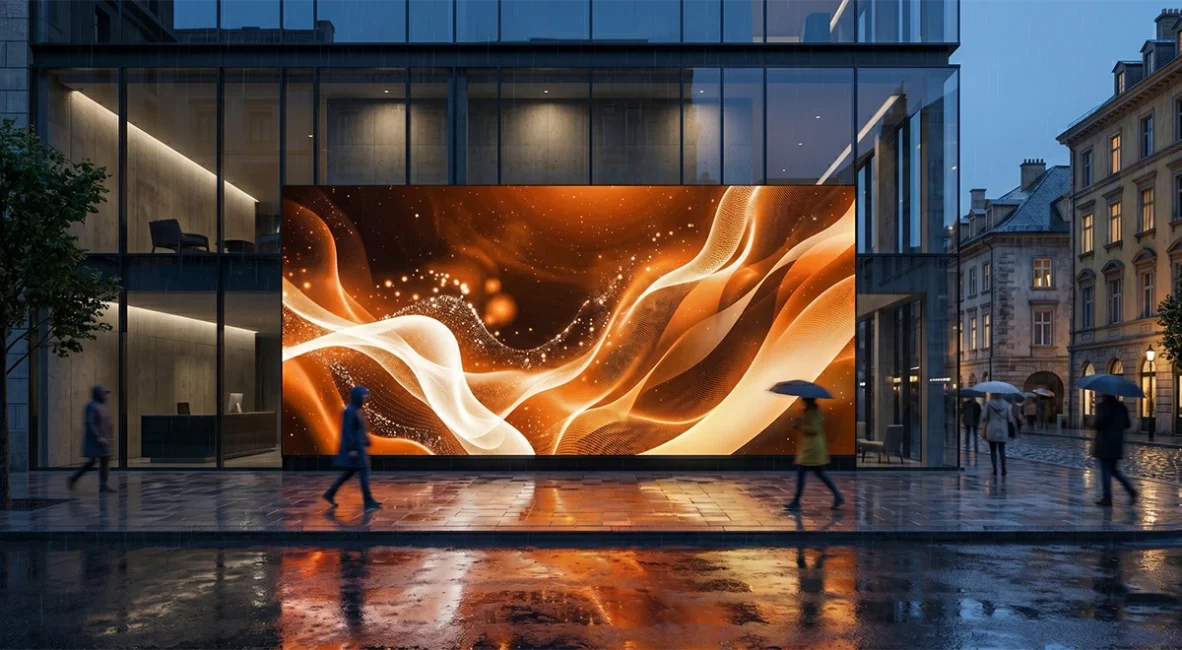
Outdoor LED walls face a completely different challenge: they must stay visible and legible in direct sunlight, rain, dust, and temperature extremes. Brightness levels here jump to 5,000–7,500 nits, with full IP65-rated waterproof housings, reinforced aluminum frames, and thermal management systems built in.
Pixel pitch is larger for outdoor applications — typically 3.9mm to 10mm — because viewers stand farther from the screen. A 6mm outdoor pixel pitch looks crisp from 6 meters away, which is exactly the distance most pedestrians and drivers experience the content from.
Specifying an indoor panel for an outdoor application is the single most expensive mistake in this category. It will fail within months. Always match the panel to the environment.
Pixel Pitch Explained — The Spec That Controls Image Quality and Cost
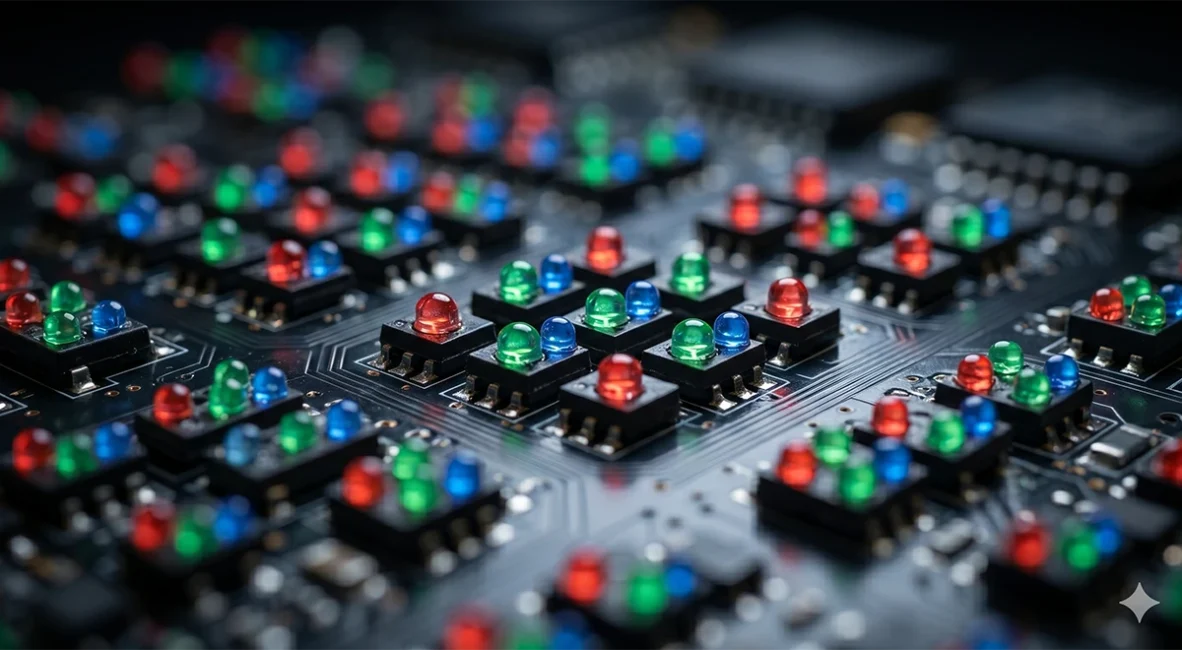
Pixel pitch is the distance in millimeters between the center of one LED pixel and the next. It is the single biggest driver of both image quality and price.
The Rule of Thumb That Saves Money
There is a simple formula that signage professionals use: the minimum viewing distance in meters should roughly match the pixel pitch in millimeters. A 2mm pitch is sharp from 2 meters. A 4mm pitch is sharp from 4 meters. A 10mm pitch is sharp from 10 meters or farther.
This matters because pitch drives cost exponentially. A 1.5mm pitch panel can cost 3 to 5 times more than a 4mm pitch panel of the same size. If viewers will never be closer than 5 meters, paying for a 1.5mm pitch is wasted budget.
How to Specify Pitch Correctly
Measure the closest realistic viewing distance, then round up to the nearest practical pitch value. Conference rooms and close-viewing retail displays usually land on 1.2–2.5mm. Reception lobbies and showrooms typically work best at 2.5–3.9mm. Outdoor facades, stadiums, and event displays function perfectly at 6–10mm.
Anything smaller than necessary is over-specification. Anything larger than necessary looks pixelated. The right pitch is the one that matches the viewing reality of the space.
LED Wall Costs — What You Are Actually Paying For
One of the most common questions businesses ask is how much an LED wall costs. The honest answer is: it depends on four variables — and any supplier who quotes a price without asking about these is either guessing or overcharging.
The Four Cost Drivers
Size is the most obvious factor. LED walls are priced per square meter, and larger surface areas reduce the per-unit cost slightly while increasing the total investment linearly. Budget accordingly.
Pixel pitch multiplies cost exponentially as it tightens. As a rough benchmark in the European market, a 4mm indoor LED wall typically runs between €2,500 and €4,500 per square meter, while a 1.5mm indoor wall can reach €8,000 to €12,000 per square meter. Outdoor walls at 6mm–10mm typically sit between €3,000 and €6,000 per square meter depending on brightness and IP rating.
Content system and controller — every LED wall needs a video processor, media player, and a content management system. Factor in €1,500 to €8,000 depending on content complexity and remote management needs.
Installation, structure, and electrical work are frequently underestimated. Structural mounting, cabling, cooling, and certified installation typically add 15% to 25% on top of the panel cost. For outdoor installations with custom enclosures, that percentage can climb higher.
Why Factory-Direct Pricing Changes the Math
Buying through a reseller adds layers of margin that can inflate the final price by 30% to 60%. Working directly with a signage manufacturer — especially one with EU-based production — removes those margins and gives businesses direct access to engineering support, material choices, and warranty service.
This is exactly why Vizal’s model works the way it does. Twenty years of factory production, direct client relationships, and a two-year guarantee on LED display solutions — without the middleman cost structure.
How to Calculate the ROI of an LED Wall
LED walls are expensive. They are also one of the few physical marketing assets where return on investment can be tracked with precision. Businesses that treat the purchase as a marketing investment — not as a signage expense — consistently see the strongest returns.
The Revenue Equation
Start with three numbers. First, the incremental foot traffic the LED wall generates — measured before and after installation. Second, the average transaction value. Third, the conversion rate of walk-ins to buyers. Multiply these together and divide by the total installed cost to get a straightforward payback period.
In retail environments, data shows digital signage drives sales lifts of 24% to 38% on featured products. Applied to an LED wall in a storefront, the payback period typically ranges from 8 to 18 months depending on traffic volume and transaction value.
The Brand Equity Layer
Beyond direct revenue, an LED wall functions as a permanent brand statement. The space itself communicates quality, scale, and seriousness before a single word is read — which aligns with the principle that your space speaks before you do. For companies competing on premium positioning, this equity layer is often more valuable than the direct foot-traffic gain.
Common LED Wall Mistakes — And How to Avoid Them
After twenty years of production experience across Europe, a clear pattern emerges. The businesses that get the most from their LED wall investment consistently avoid the same five mistakes.
They buy the pixel pitch their viewing distance actually requires, not the tightest one a salesperson pushes. Specify the right brightness for the environment — and never use indoor panels outdoors. They budget for installation and content management upfront instead of treating it as an afterthought. They choose a manufacturer with local service capability, because an LED wall without fast repair access is a liability. And they plan content strategy before installation, not after.
An LED wall without a content plan is an expensive blank screen. Every successful installation starts with a clear answer to one question: what will this screen show, to whom, and when.
Frequently Asked Questions
How long does an LED wall last?
A properly specified LED wall from a reputable manufacturer has an operational lifespan of 80,000 to 100,000 hours — roughly 7 to 10 years of daily commercial use. Individual modules are hot-swappable, which means maintenance does not require replacing the entire wall.
Can an LED wall be customized to any size or shape?
Yes. LED walls are modular by design. Standard cabinet sizes combine to produce flat walls of virtually any dimension, and curved, cylindrical, or custom-shaped configurations are also possible with the right panel series. Custom geometry is one of the areas where working directly with a signage manufacturer makes the biggest difference.
What is the difference between an LED wall and an LED video wall?
The terms are used interchangeably in most of the industry. Both refer to a modular LED display built from tiled panels. Some suppliers use “LED video wall” specifically for installations optimized for live video playback, but the underlying hardware is the same category of product.
Ready to Specify Your LED Wall?
The right LED wall is the one matched precisely to the space, the audience, and the business goal behind it. Over-specifying wastes budget. Under-specifying wastes the investment. Getting it right starts with a conversation about the environment, the viewing distance, and what the screen needs to accomplish.
Vizal has been producing custom signage and LED display solutions for European brands for over twenty years — from compact lobby walls to full-scale outdoor installations. Factory-direct pricing, two-year guarantee, and engineering support from specification to installation.
Request a quote for your custom LED wall project — or explore Vizal’s LED display portfolio to see what is possible.